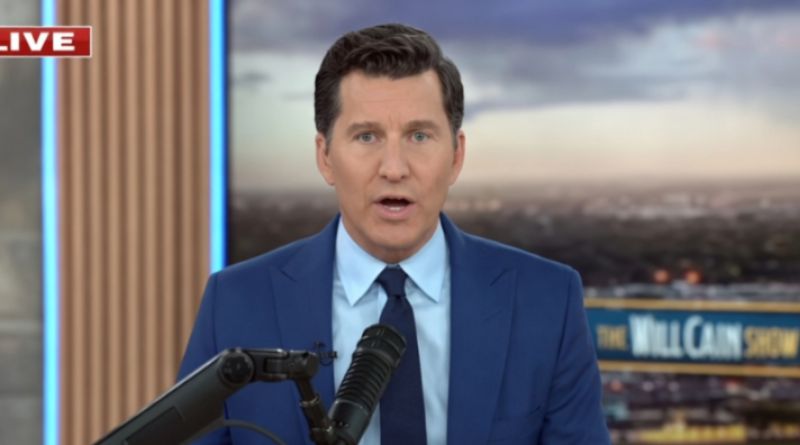
Fox News host Will Cain recently drew attention to seven high-profile scientists and defense-adjacent researchers who have reportedly died or gone missing in recent years, suggesting viewers should pay closer attention to possible overlaps among the cases.
During a segment aired on his Fox News program, Cain referenced a set of individuals associated with institutions including NASA, Caltech, Los Alamos National Laboratory, the U.S. Air Force research community and academic science programs.
Cain walked through several cases involving scientists and defense-linked personnel, describing some as deaths and others as missing-person reports across different states and timeframes.
Among those mentioned were Carl Grillmair, Frank Maiwald, Monica Reza, William McCasland, Melissa Casias, Anthony Chavez, and Nuno Loureiro, each tied in various ways to advanced research organizations.
Some of the individuals were reported dead under unclear circumstances, while others remain missing, though authorities have not confirmed any connection between the cases.
Cain suggested viewers should consider whether there might be meaningful overlap among the institutions involved, while also acknowledging that no official link has been established.
The segment concluded with discussion of whether patterns in high-security scientific environments warrant additional public attention, despite the lack of verified evidence connecting the individual cases.
The segment emphasized that the individuals shared professional or institutional proximity to major U.S. scientific and defense research organizations, which were presented as a potential point of overlap across otherwise separate incidents.
These included agencies and laboratories such as NASA, the Jet Propulsion Laboratory, Los Alamos National Laboratory, Air Force research units, and elite academic institutions involved in physics, aerospace, and energy research.
While each case has been reported independently in various media outlets, the segment framed them collectively in a way that raised questions about possible patterns without presenting confirmed investigative findings linking them.
Following the broadcast, clips circulated on social media, where viewers expressed a mix of concern, skepticism, and curiosity about whether the cases could be related, despite the absence of official confirmation.
We note that the discussion reflects a broader pattern in which high-profile scientific or defense-related personnel cases can become widely circulated online when grouped together, even when authorities treat them as unrelated.
The presentation relied on brief descriptions of each case, often highlighting professional backgrounds and institutional affiliations rather than detailed investigative outcomes.
This approach allowed the segment to move quickly between stories, creating a cumulative impression of similarity despite differences in context and circumstance.
We also emphasize that official investigations into each incident remain ongoing or have concluded separately, with no publicly verified evidence of coordination.
Overall, the segment functioned as a narrative overview of several unrelated cases involving scientists and defense-linked professionals, rather than a presentation of confirmed investigative conclusions.
It ultimately encouraged viewers to consider whether institutional overlap alone is sufficient to imply deeper connections without corroborating evidence.
We present this summary as a neutral restatement of the segment content, preserving its structure while avoiding any assertion that the cases are linked.