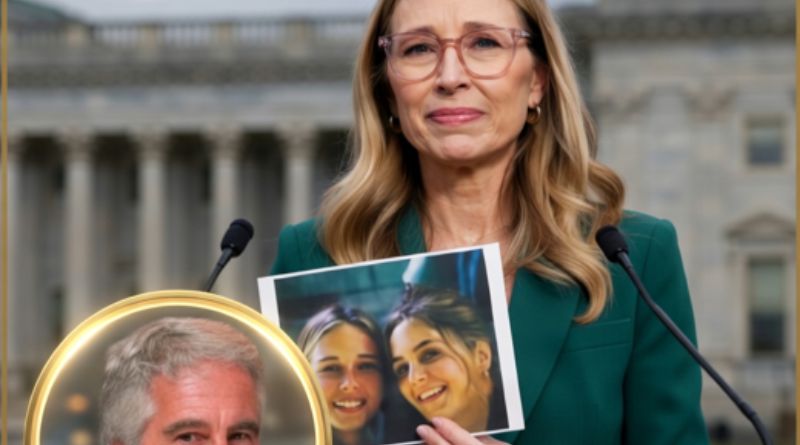
In September 1996, a phone call placed to the Miami field office of the Federal Bureau of Investigation may have marked an early but largely overlooked warning in what would later become one of the most high-profile criminal cases in modern American history. The caller identified herself as a professional artist and reported troubling allegations involving Jeffrey Epstein. She claimed that Epstein possessed illicit photographs of her underage sisters and described disturbing behavior she said she had witnessed inside his Manhattan residence. The caller was later identified as Maria Farmer.
At the time, however, there appeared to be no meaningful response. According to Farmer, the call did not result in any follow-up communication, nor was there any indication that a formal investigation had been initiated. No case number was ever confirmed, and for years, there was no publicly available documentation to verify that the complaint had even been recorded. As a result, Farmer’s account remained in a state of uncertainty, discussed in media and legal circles but lacking official corroboration.
That uncertainty persisted for nearly three decades. Then, in December 2025, a significant development shifted the narrative. As part of a broader release of materials related to Epstein, the United States Department of Justice disclosed a document dated September 3, 1996. The document referenced a complaint made to the FBI regarding alleged misconduct involving minors and identified the complainant only as “a professional artist.”
Farmer’s legal representatives later stated that the description aligned with her account, effectively confirming that her report had been documented at the time. In subsequent interviews, Farmer expressed a complex emotional response. She described a sense of validation after years of doubt but also deep frustration and sorrow over what might have been prevented had the complaint been acted upon more decisively.
The resurfacing of this document has drawn renewed attention to the timeline of events surrounding Epstein. It was not until the mid-2000s—nearly ten years after Farmer’s reported call—that a separate investigation began to gain momentum. This inquiry, initiated in Palm Beach, Florida, uncovered numerous allegations and identified multiple victims. Evidence collected during that period suggested a broader and more systemic pattern of abuse.
Federal authorities eventually became involved in the case. However, the outcome of those proceedings has remained a source of ongoing controversy. Epstein ultimately entered into a plea agreement that resulted in a relatively short sentence, along with conditions that critics argued were unusually lenient. These included work-release privileges, which allowed him to leave custody for extended periods. The handling of the case has since been widely debated in discussions about accountability and the treatment of powerful individuals within the justice system.
The rediscovered 1996 complaint has now become a central element in a new wave of legal action. A group of twelve women, identified in court filings as Doe 1 through Doe 12, has filed a lawsuit seeking $100 million in damages from the FBI. The plaintiffs argue that federal authorities failed to act on credible early warnings and that this inaction allowed further abuse to occur over an extended period.
Legal experts note that such claims face significant challenges. Lawsuits against federal agencies must navigate complex legal doctrines, including issues related to sovereign immunity and strict standards for proving negligence. Even so, the case represents a notable effort to pursue institutional accountability, not only focusing on individual wrongdoing but also on systemic failures.
Another issue raised by the document’s release concerns its absence from a 2020 internal review conducted by the FBI. That review examined the agency’s handling of Epstein-related allegations, but it did not include any reference to the 1996 complaint. The omission has prompted further scrutiny and raised questions about whether the document was overlooked, excluded due to procedural reasons, or omitted for other purposes. As of now, no definitive public explanation has been provided.
Beyond the legal and procedural questions, the case has also reignited broader discussions about how early reports of misconduct are handled, particularly when they involve influential individuals. Advocates for victims argue that the situation illustrates systemic weaknesses, including the risk that credible allegations may be dismissed or insufficiently pursued at early stages. Others emphasize the importance of considering the context of the 1990s, when reporting systems and investigative protocols differed from current standards.
For Farmer and other accusers, the issue extends beyond institutional accountability. It also involves recognition, validation, and the long-term consequences of not being heard. Her response to the document’s release reflects both relief at being believed and grief over the potential impact of missed opportunities for intervention.
As the lawsuit moves forward through the federal court system, it is expected to face careful legal scrutiny. At the same time, calls for further review—possibly including congressional inquiry—have begun to emerge.
Ultimately, the rediscovery of a single document has reopened complex and unresolved questions. It highlights the importance of early reporting and timely response, while underscoring how missed warnings can shape the trajectory of major criminal cases. As proceedings continue, the focus is likely to remain not only on what happened, but also on what might have happened differently.