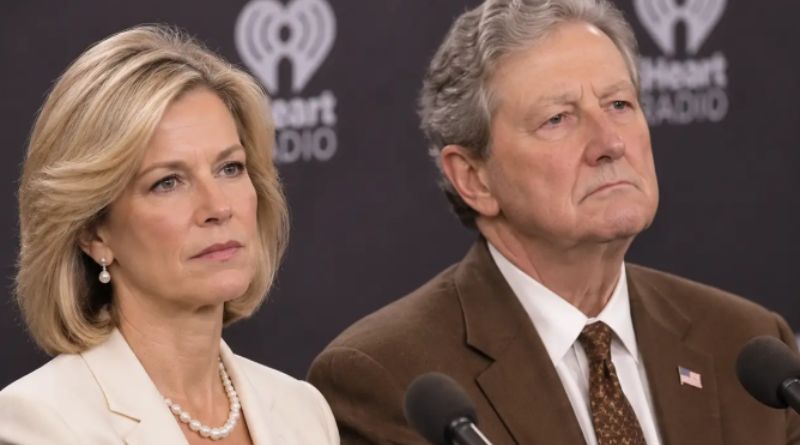
Washington’s political atmosphere is imagined as becoming increasingly tense after Senator John Neely Kennedy faces a provocative question during a televised interview.
What begins as an ordinary political discussion quickly develops into a dramatic exchange, capturing the attention of everyone watching the imagined broadcast.
With cameras recording and journalists gathered around the interview table, Kennedy listens carefully as the interviewer delivers an unexpectedly mocking remark.
The senator pauses, adjusts his position, and looks directly toward the interviewer before preparing to respond.
For several seconds, the atmosphere becomes noticeably uncomfortable as everyone waits to hear what Kennedy will say.
“Are we seriously going to have this conversation based on that question?” Kennedy responds during the fictional confrontation.
His expression remains serious as he continues addressing the interviewer, refusing to allow the provocative remark to dominate the discussion.
The interviewer attempts to continue, but Kennedy raises his hand slightly, signaling that he has not finished making his point.
The exchange becomes the central moment of this imagined political story.
Within the fictional broadcast, viewers begin discussing the confrontation, with some focusing on the original question and others examining Kennedy’s response.
The incident creates an atmosphere of uncertainty throughout the studio.
For those following American politics, confrontational interviews can become particularly memorable when public officials face unexpected questions.
However, the fictional scenario also explores the importance of respectful communication and the responsibility of journalists to ask meaningful questions.
Kennedy has developed a recognizable public identity through his political career, distinctive speaking style, and frequently humorous observations.
As a United States senator representing Louisiana, he has participated in legislative debates, congressional hearings, and discussions involving important national issues.
His public appearances have attracted attention from political supporters, critics, journalists, and audiences interested in American government.
The fictional confrontation explores how a familiar political personality might respond when challenged in an unexpected television setting.
Rather than immediately changing the subject, Kennedy begins explaining why he considers the interviewer’s approach unproductive.
He argues that political discussions should focus on policies, decisions, evidence, and the consequences of government actions.
The interviewer listens before attempting to clarify the original question.
However, Kennedy continues emphasizing that public conversations deserve more substance than personal remarks.
The imagined exchange becomes increasingly intense as both participants attempt to establish control over the conversation.
The camera captures their expressions while the studio audience watches carefully.
Several journalists exchange glances as the discussion moves away from its original direction.
Kennedy then leans slightly forward and addresses the interviewer directly.
“If you want to challenge my position, let’s discuss the actual record and the facts behind it,” he says in the fictional exchange.
The remark changes the atmosphere, shifting attention toward the substance of the political discussion.
The interviewer responds by explaining that public officials should expect difficult questions.
Kennedy acknowledges that scrutiny is an essential part of democratic accountability.
He emphasizes that elected representatives must answer questions about their decisions and public responsibilities.
However, he distinguishes challenging questions from remarks designed primarily to provoke an emotional reaction.
That distinction becomes one of the central themes of the fictional confrontation.
The discussion then turns toward the senator’s political record.
Kennedy explains that political decisions should be examined through their legislative details and potential consequences.
He argues that complicated policy questions cannot always be reduced to a single headline or brief television exchange.
Economic priorities, federal spending, government accountability, and national policy require careful examination.
The interviewer asks whether Kennedy believes his positions have been adequately explained to the American public.
The senator responds by emphasizing the importance of presenting arguments clearly and addressing criticism directly.
The fictional conversation begins attracting even more attention within the imagined studio.
Kennedy acknowledges that political disagreement is an unavoidable part of public service.
Different communities have different priorities, and elected representatives frequently encounter competing expectations.
A meaningful political discussion should allow those differences to be examined openly.
He suggests that disagreements become less productive when participants concentrate exclusively on personal attacks.
The interviewer challenges this interpretation, arguing that strong questioning remains necessary when public officials hold influential positions.
Kennedy agrees that difficult questions are legitimate.
He explains that the purpose of an interview should be to provide information rather than simply generate uncomfortable television moments.
This exchange introduces a broader discussion about political journalism.
News organizations regularly face the challenge of balancing aggressive questioning with accurate and understandable reporting.
Public officials must also recognize that journalists have a responsibility to examine their decisions.
The fictional confrontation explores both sides of that relationship.
Kennedy then returns to the original question and asks the interviewer to explain precisely what evidence supports the remark.
The interviewer briefly reviews the subject before attempting to redirect the discussion.
Kennedy responds by emphasizing that claims about political records should be supported by verifiable information.
He insists that public debate becomes stronger when arguments are examined carefully.
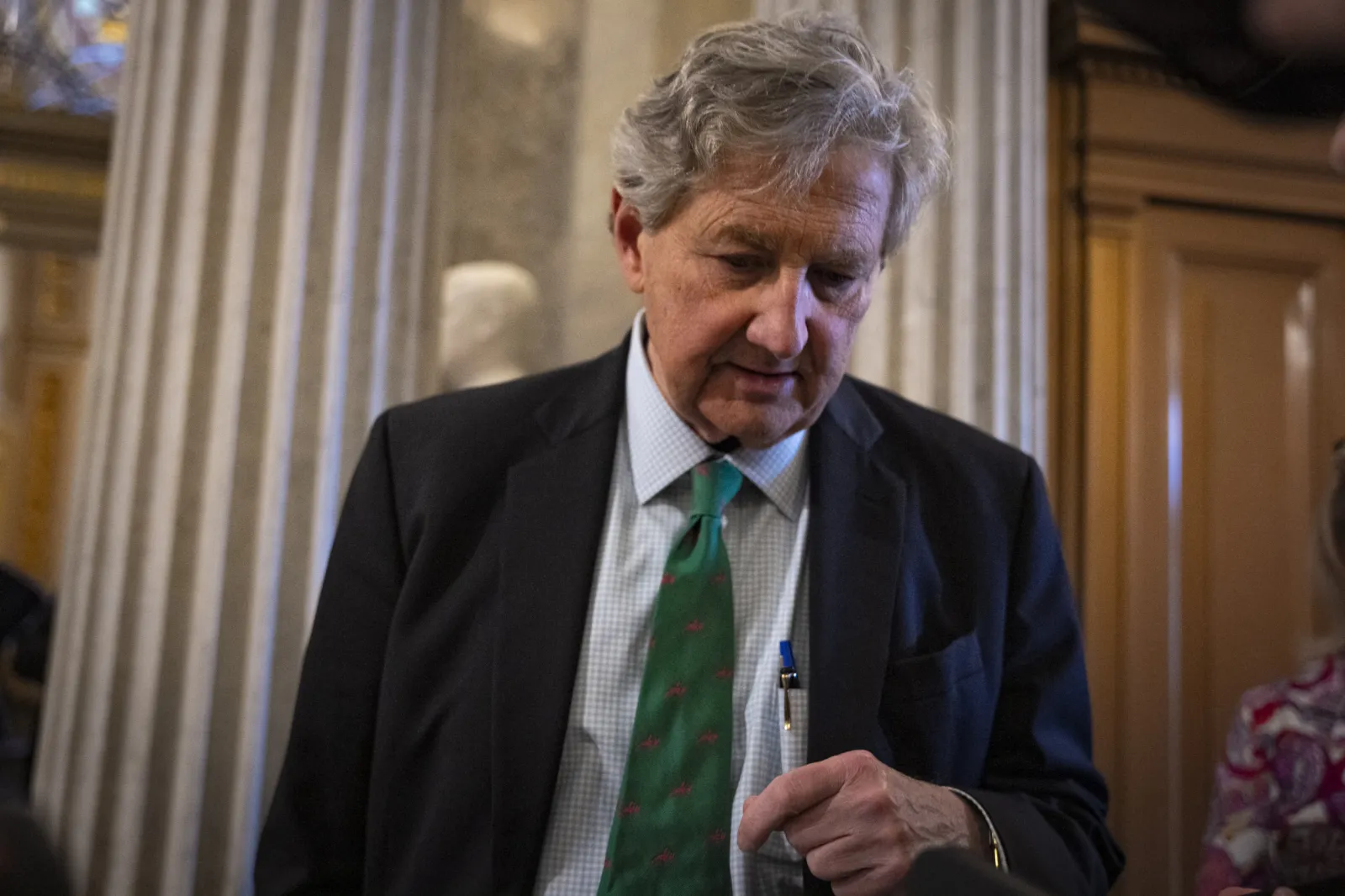
The imagined audience listens as the senator continues presenting his perspective.
The atmosphere remains tense, but the discussion gradually becomes more focused on substantive political issues.
Several attendees appear particularly interested in the exchange.
The interviewer then raises another question about the expectations facing elected officials.
Kennedy acknowledges that public service requires accountability and consistent communication with constituents.
He explains that political leaders cannot expect universal agreement.
However, he believes disagreements should be discussed through arguments that can be examined and challenged.
The senator’s fictional remarks return the conversation to the responsibilities associated with elected office.
He emphasizes that public officials should explain their decisions and accept scrutiny.
That message becomes particularly relevant during an imagined interview involving a controversial question.
The interviewer asks whether Kennedy believes his public image sometimes distracts from discussions about policy.
Kennedy responds by acknowledging that political personalities can attract attention beyond their legislative activities.
He explains that media coverage frequently emphasizes memorable moments because audiences respond strongly to recognizable personalities.
Nevertheless, he argues that policy discussions deserve equal attention.
The fictional exchange highlights the tension between entertainment-driven television and substantive political journalism.
A dramatic moment can attract viewers, but understanding legislation requires more detailed explanations.
Both participants recognize that television interviews influence how audiences understand political debates.
The interviewer then asks Kennedy whether he regrets his sharp response.
Kennedy pauses before explaining that he does not believe disagreements should be avoided simply because they become uncomfortable.
He suggests that respectful disagreement can help clarify important issues.
However, he also acknowledges that tone and presentation can influence how audiences interpret a conversation.
His fictional response adds another dimension to the exchange.
The discussion becomes less focused on the original remark and more concerned with the broader purpose of public debate.
As the interview continues, the senator reflects on his responsibilities to Louisiana residents.
He acknowledges that people across the state have different expectations regarding economic opportunity, federal spending, infrastructure, and government priorities.
Those concerns deserve serious attention from elected representatives.
Kennedy emphasizes that political disagreements should ultimately lead toward clearer explanations and meaningful public discussion.
The interviewer listens before introducing another question.
This time, the subject concerns how political leaders respond when criticism becomes personal.
Kennedy argues that public officials must develop the ability to distinguish criticism of their decisions from attacks on their personalities.
He explains that both supporters and critics deserve opportunities to express their perspectives.
The fictional exchange demonstrates how a confrontational interview can develop into a wider conversation about democratic accountability.
The audience remains attentive as the discussion approaches its most memorable moment.
The interviewer returns to the original provocative remark, asking Kennedy whether he believes the question was appropriate.
Kennedy briefly smiles before answering.
He explains that journalists should have the freedom to ask challenging questions, while public officials should have the opportunity to respond fully.
He adds that meaningful interviews depend on both responsibilities.
The statement creates a noticeable pause throughout the studio.
For several seconds, neither participant interrupts the other.
The interviewer then acknowledges the senator’s explanation before moving toward another subject.
The atmosphere begins to settle as the confrontation gradually loses its intensity.
Nevertheless, the fictional exchange has already become the most discussed portion of the imagined broadcast.
Viewers begin examining the senator’s responses and the interviewer’s original approach.
Some focus on the importance of accountability, while others emphasize the need for respectful political communication.
The different interpretations demonstrate how audiences can respond differently to the same televised interaction.
The fictional story also explores the broader influence of political interviews in modern American society.
Television remains an important platform through which public officials explain their positions and respond to criticism.
However, short clips can sometimes circulate without the context provided by an entire conversation.
That makes complete recordings and accurate summaries particularly important.
The imagined confrontation encourages viewers to consider the full exchange before forming conclusions.
Kennedy’s fictional remarks also raise questions about political communication in an increasingly digital environment.
Social media allows short interview clips to reach millions of people within minutes.
A single memorable sentence can become the subject of extensive discussion.
However, understanding the original issue frequently requires examining the broader conversation.
The fictional narrative emphasizes the importance of separating dramatic presentation from substantive political information.
As the interview approaches its conclusion, Kennedy takes another opportunity to address the audience.
He explains that political disagreements should not prevent Americans from discussing shared challenges.
Different perspectives can contribute to better understanding when participants remain willing to listen.
He acknowledges that no public official should be considered beyond criticism.
At the same time, criticism should focus on decisions, arguments, and evidence rather than unsupported personal assumptions.
The interviewer responds by recognizing the importance of continued public scrutiny.
Their exchange creates a more measured ending than the earlier confrontation.
The senator then thanks the interview team and prepares to leave the studio.
The cameras continue recording as the participants exchange brief acknowledgments.
Several members of the production team begin preparing for the next segment.
The fictional confrontation concludes without any additional dramatic incident.
Yet the exchange remains the central topic among the imagined audience.
Political commentators begin discussing the importance of asking difficult questions while allowing public officials sufficient time to explain their positions.
Others examine the challenges of maintaining productive conversations in an increasingly polarized media environment.
The fictional scenario provides an opportunity to consider both responsibilities.
Journalists must investigate public claims, challenge incomplete explanations, and provide audiences with relevant information.
Elected officials must respond honestly, explain their decisions, and remain accountable to the people they represent.
Neither responsibility should disappear simply because a conversation becomes uncomfortable.
That principle becomes the broader message behind the imagined confrontation.
For Kennedy’s supporters, the fictional exchange represents an opportunity to consider how political figures communicate under pressure.
For critics, it raises questions about the importance of examining public statements and legislative records.
For neutral viewers, it highlights the value of asking precise questions and evaluating answers carefully.
The imagined broadcast ultimately encourages audiences to focus on evidence rather than assumptions.
As the discussion continues beyond the studio, viewers begin sharing their interpretations.
Some remember the senator’s opening response, while others concentrate on the interviewer’s attempt to redirect the conversation.
Many focus on the importance of maintaining civility during political disagreements.
The exchange becomes a reminder that public debate involves more than dramatic television moments.
It also requires patience, evidence, accountability, and a willingness to consider different perspectives.
The fictional story concludes with a broader reflection on American political communication.
A challenging question can create an uncomfortable moment, but it can also provide an opportunity for meaningful clarification.
A strong response can attract attention, but its substance should always be examined independently.
Ultimately, audiences deserve complete information and the opportunity to reach their own conclusions.
That is the central message behind this imagined Senate confrontation involving John Neely Kennedy.