The tone was measured, legalistic, and unmistakably threatening.
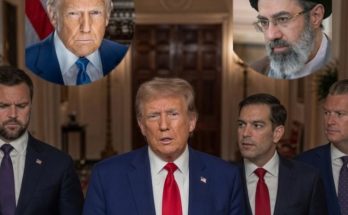
President Donald Trump’s announcement of a “very successful attack” on Iranian nuclear facilities immediately shattered any sense of stability. In Tehran, Foreign Minister Abbas Araghchi denounced the strike as “outrageous” and “criminal,” insisting that Iran retained the right to respond in self-defense. Although his remarks were framed in diplomatic language, the warning carried a clear message. His statement that Iran “reserves all options” was widely interpreted as a signal that retaliation remained on the table, raising fears of a broader and potentially dangerous escalation.
Across Europe, the reaction was far less celebratory.
While leaders in Washington and Jerusalem described the operation as a major success and a significant setback for Iran’s nuclear ambitions, many European officials viewed the situation with deep concern. Diplomats warned that the crisis could push the region closer to a wider conflict and undermine years of international efforts aimed at preventing confrontation. Discussions in major European capitals focused on the risk of miscalculation and the possibility that tensions could spiral beyond anyone’s control.
At the United Nations, representatives carefully weighed every statement, aware that even a single poorly chosen word could further inflame an already volatile situation. As governments assessed their next steps, uncertainty spread across the international community. The world once again found itself watching closely, waiting to see whether the coming days would bring restraint, retaliation, or a dangerous new chapter in the conflict.