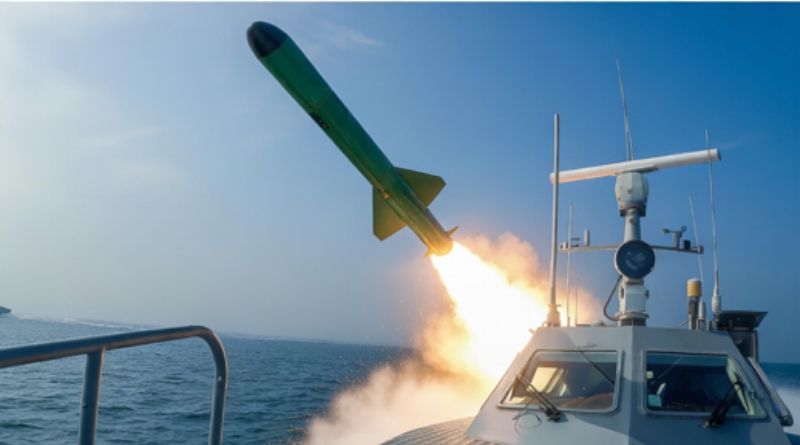
When Iran’s Revolutionary Guard released footage of a drone swarm attacking a target modeled after the aircraft carrier USS Abraham Lincoln (CVN-72), the symbolism was clear. The message suggested that large numbers of inexpensive drones could overwhelm one of the most powerful warships in the world. In the video’s narrative, quantity defeats quality. The imagery was meant not only for domestic audiences but also for military observers watching developments around the Strait of Hormuz. Yet propaganda simplifies warfare. Real combat scenarios are far more complex. If Iran attempted such an operation in reality, it would likely begin with surveillance and limited escalation rather than a sudden swarm. Launch points along Iran’s southern coastline, particularly near Bandar Abbas, could release waves of one-way attack drones similar to the Shahed-136. These drones are relatively simple systems that follow pre-programmed GPS routes toward a designated location. Their strength lies in affordability and numbers, not sophisticated targeting or real-time adaptability.
A U.S. carrier strike group would probably detect the threat long before the drones approached the fleet. Aircraft such as the E-2D Hawkeye patrol high above the fleet and use advanced radar to track small, low-flying targets over long distances. Through systems like Cooperative Engagement Capability, information from multiple sensors is shared across the strike group. This allows ships to respond using data gathered by other platforms, effectively linking the fleet into a single defensive network. Defending ships rely on layered protection. At longer ranges, guided missiles such as the SM-6 missile can intercept incoming threats. Closer to the ship, systems like the RIM-116 Rolling Airframe Missile provide rapid interception. If a drone manages to approach within a few kilometers, the Phalanx CIWS can engage it with a high-speed stream of radar-guided cannon fire. One criticism often raised in discussions of drone warfare is the imbalance between cheap drones and expensive interceptor missiles. Iran’s strategy of launching large numbers of drones is designed to exploit that difference and potentially exhaust defensive magazines. However, new technologies are beginning to change that calculation.
The U.S. Navy has been testing directed-energy systems, including shipboard lasers and high-powered microwave weapons. Instead of firing traditional ammunition, these systems use electrical power to disable or destroy incoming drones by damaging their electronics or guidance systems. Because they rely on energy rather than missiles, they could potentially engage multiple targets without quickly running out of ammunition. This does not mean modern fleets are invulnerable. Large-scale attacks that combine drones, cruise missiles, and anti-ship ballistic missiles—such as Iran’s Khalij Fars missile—could create extremely complex battle conditions. Commanders must coordinate defensive systems carefully to avoid interference and ensure each layer of defense functions effectively. Ultimately, modern naval warfare depends on integration. Sensors, networks, and weapons must operate together in real time. Drone swarms challenge that system, but advances in detection, automation, and directed-energy technology are reshaping how fleets respond. In a real conflict, the outcome would depend less on dramatic visuals and more on the quiet coordination of advanced defensive systems.