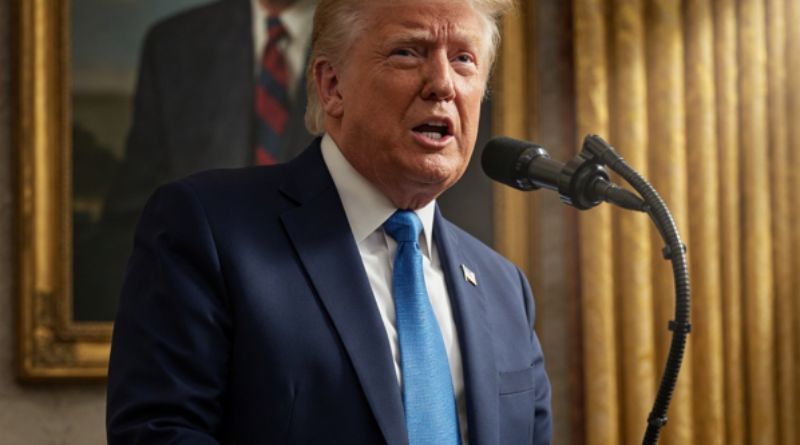
Donald Trump ignited a wave of political debate in 2026 after making striking remarks about Cuba during a media interaction. His suggestion that there could be a “friendly takeover” of the island nation quickly captured public attention, spreading across news platforms and social media. The unusually direct phrasing left room for interpretation, prompting both support and concern from different corners of the political spectrum.
Supporters of Trump welcomed the comment as a reflection of his characteristic bluntness. They argued that his willingness to speak openly about sensitive geopolitical issues demonstrates authenticity and strength. For many in his base, such remarks signal a readiness to challenge adversarial governments and rethink traditional foreign policy approaches. Critics, however, viewed the statement in a far more cautious light. They warned that even rhetorical suggestions of a “takeover” could be interpreted as endorsing interventionist policies, potentially escalating tensions in an already fragile international environment.
The remarks reportedly came during a broader discussion about Cuba’s economic difficulties. Trump referenced the country’s ongoing financial struggles, highlighting shortages and instability that have affected daily life for many Cubans. While he did not outline a specific policy plan, his comments hinted at the possibility of increased U.S. involvement in Cuba’s future. The ambiguity of his language—suggesting outcomes that “may be friendly” or otherwise—has fueled ongoing speculation about what he intended to convey.
Understanding the context behind these remarks is essential. Cuba has faced decades of economic pressure, shaped in part by U.S. sanctions as well as internal structural challenges. Relations between Washington and Havana have historically shifted depending on the administration in power, ranging from cautious engagement to strict economic restrictions. Any suggestion of deeper U.S. involvement in Cuba’s governance inevitably carries historical and political weight, given past interventions in the region.
Reactions to Trump’s comments have been deeply divided. Some political observers interpret his words as strategic ambiguity, a negotiating tactic designed to keep options open without committing to a clear course of action. Others argue that such rhetoric risks being misinterpreted internationally, particularly by governments sensitive to issues of sovereignty. While there has been no official indication of policy changes following the remarks, the discussion they generated underscores how quickly political language can influence global perceptions.
The situation also highlights the broader impact of unscripted communication in modern politics. Trump has long been known for his off-the-cuff speaking style, which often bypasses traditional diplomatic language. This approach can energize supporters who value directness, but it can also create uncertainty when addressing complex international issues. In an era where statements are instantly amplified online, even brief comments can shape narratives and trigger widespread debate.
Ultimately, Trump’s remarks about Cuba illustrate the delicate balance between rhetoric and policy in foreign affairs. While it remains unclear whether his statement signals any concrete shift in U.S. strategy, it has undeniably drawn attention to the evolving dynamics between the two countries. As discussions continue, analysts and policymakers alike will be watching closely to see whether these words translate into action or remain part of the broader political discourse.