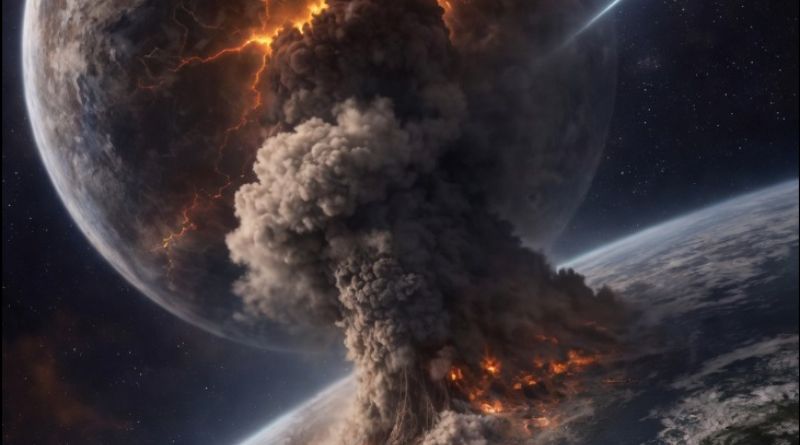
A warning emerged quietly at first, buried in technical language and routine reassurances. For a time, it sounded like any other passing object—another asteroid briefly crossing humanity’s neighborhood in space.
But as size estimates were refined, attention sharpened. The object, designated 52768 (1998 OR2), is a massive near-Earth asteroid, measuring roughly 1.5 to 4 kilometers across. In cosmic terms, it belongs to a class capable of global consequences if ever on a collision course—enough to affect climate systems and reshape environments on a planetary scale.
NASA and international observatories track its orbit with high precision, using radar and optical data to map its trajectory. Current calculations show it passing safely by Earth’s orbital path on June 2nd at a distance that presents no risk of impact. Its speed—about 8.7 kilometers per second—underscores how dynamic and fast-moving near-Earth space can be.
Scientists are consistent: there is no impact threat, no deviation from a safe trajectory, and no cause for public concern.
Still, the flyby highlights something broader. Earth’s protection from cosmic hazards depends on early detection, sustained monitoring, and coordinated global response. While these systems have improved significantly, they are not infallible, and intervention capabilities remain limited compared to the scale of potential threats.
In that sense, the asteroid is less a warning than a reminder. This one will pass harmlessly—but the larger question remains whether future objects will always give us enough time to react.