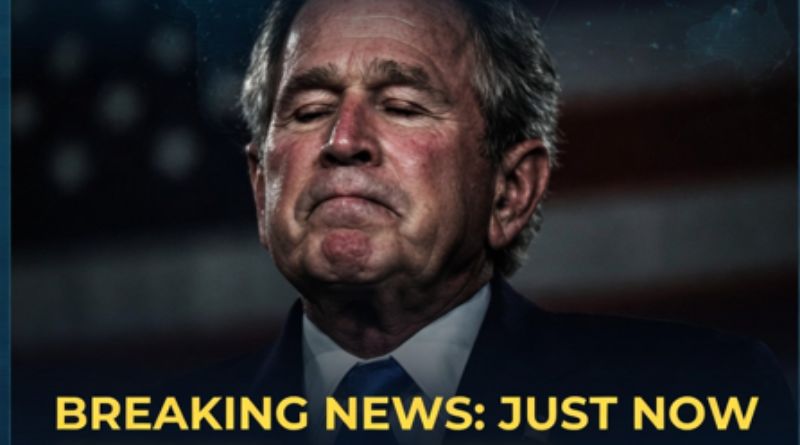
After years at the center of American power, he left office without spectacle. No dramatic exit, no extended final address—just the quiet transition that follows a presidency already defined by intensity and division.
In the years since, George W. Bush has not vanished so much as changed register. He stepped away from day-to-day politics and built a post-presidential life that is notably restrained by modern standards. In Texas, he trades formal schedules for routines that are deliberately ordinary: painting in a studio, reading, and occasional public appearances that feel more institutional than political.
Where he does remain visible, it is often through structured causes rather than commentary. Veterans’ initiatives, global health efforts, and leadership programs associated with his post-presidency reflect a preference for long-horizon work over political engagement. His public voice is rare, and when it appears, it tends to avoid direct confrontation with current political cycles.
Perhaps what defines this phase is not reinvention, but limitation. He has not attempted to recast his presidency through constant defense or revision, nor has he fully withdrawn into silence. Instead, he occupies a narrow space between memory and distance—present enough to be recognized, absent enough to avoid shaping the present.
The legacy of his time in office remains contested. His post-presidency, by contrast, is defined less by argument than by restraint: a deliberate reduction of volume in a political culture that rarely lowers its voice.