April 2026 — International Desk
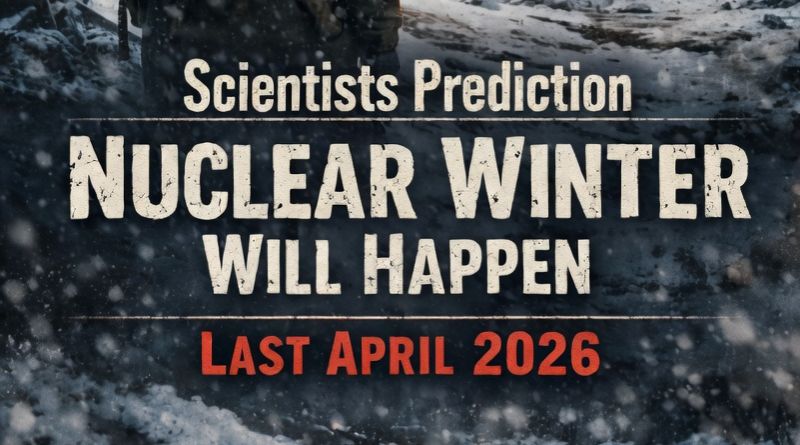
A growing number of scientists and security analysts are raising concerns about the potential consequences of a large-scale nuclear conflict, including the possibility of a “nuclear winter.” While the idea has long been studied in academic circles, experts say it remains a serious—though unlikely—risk tied to rising geopolitical tensions.
The concept of a nuclear winter refers to a dramatic and prolonged drop in global temperatures following widespread nuclear explosions. Researchers explain that massive firestorms ignited by such blasts could send thick clouds of soot into the upper atmosphere, blocking sunlight and disrupting Earth’s climate systems. Studies suggest that even a limited nuclear exchange could have measurable global effects, particularly on agriculture and food production.
Institutions such as Harvard University and other research centers have contributed to ongoing discussions about the environmental impact of nuclear war. Climate models developed in recent years indicate that reduced sunlight and cooler temperatures could shorten growing seasons, leading to widespread crop failures and increasing the risk of global food shortages.
Security analysts often point to geopolitical tensions as a key factor in these scenarios. Potential flashpoints frequently mentioned in strategic assessments include conflicts involving the United States and Iran, as well as the broader involvement of nuclear-armed states such as China, Pakistan, and North Korea. Experts caution, however, that these are hypothetical escalation pathways rather than predictions of imminent conflict.
Some speculative discussions have suggested potential timelines for when global tensions could reach a critical point. However, researchers and policy experts emphasize that such projections are not based on confirmed intelligence or scientific consensus. Instead, they are best understood as worst-case scenarios used to highlight the importance of prevention.
The potential consequences of a nuclear winter would be severe. In addition to widespread agricultural disruption, experts warn of cascading effects on ecosystems, supply chains, and global economies. Food insecurity could affect billions of people, particularly in regions already vulnerable to climate and economic instability.
Organizations like the Bulletin of the Atomic Scientists continue to monitor global risks through symbolic measures such as the Doomsday Clock, which reflects concerns about nuclear weapons and other existential threats. While not predictive, it underscores the urgency many experts feel about reducing global tensions.
Ultimately, scientists stress that a nuclear winter is not inevitable. Its likelihood depends heavily on political decisions, international cooperation, and efforts to prevent escalation. The warning serves less as a forecast and more as a reminder of the high stakes involved in managing global conflict in the modern era.