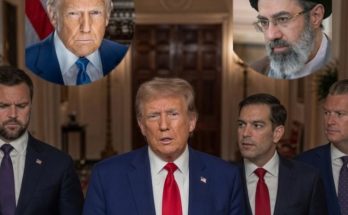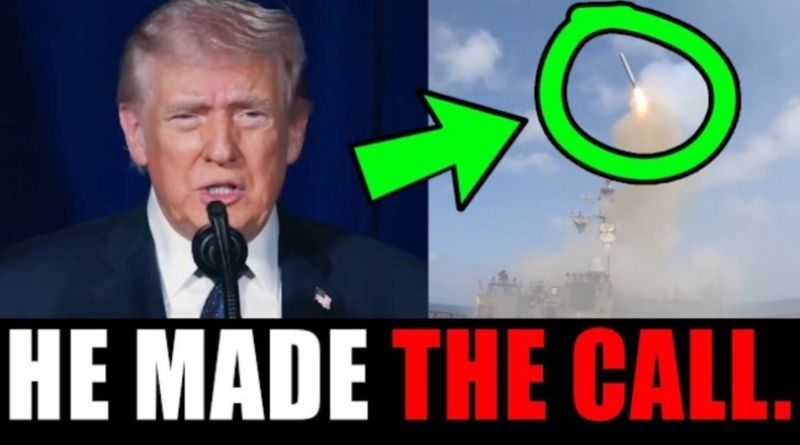
Vice President JD Vance shed new light Monday night on the moment President Donald Trump ultimately decided to authorize military strikes against Iran. During an appearance on “Jesse Watters Primetime,” Vance explained that negotiations between U.S. officials and Iran had broken down after Washington concluded that Tehran’s explanations about its nuclear program were not credible. The collapse of those discussions ultimately led Trump to approve the military operation known as “Operation Epic Fury.” According to Vance, senior American diplomats—including Secretary of State Marco Rubio, envoy Steve Witkoff, and adviser Jared Kushner—held detailed and deliberate talks with Iranian representatives in Geneva. The goal of the negotiations was to persuade Iran to halt its nuclear program in exchange for relief from international sanctions and to prevent a broader regional conflict.
However, the discussions stalled when Iranian officials insisted that uranium enrichment for civilian energy purposes was a matter of national pride. Vance said U.S. negotiators questioned those claims, pointing to the nature and location of Iran’s nuclear facilities. American officials asked why enrichment sites were built roughly 70 feet underground and why uranium was being enriched far beyond levels typically required for civilian energy production—levels that are more consistent with developing nuclear weapons. Vance emphasized that the United States does not oppose Iran producing medical isotopes or pursuing legitimate civilian nuclear activities. The concern, he said, centers on enrichment facilities that appear designed primarily to support a nuclear weapons program.
Meanwhile, the Trump administration previously stated that precision strikes conducted in June had severely damaged Iran’s nuclear infrastructure. Defense Secretary Pete Hegseth said the bombing campaign “obliterated” Iran’s ability to produce nuclear weapons, asserting that U.S. munitions struck their intended targets with devastating effectiveness. U.S. Central Command also reported that American forces have destroyed key Iranian military assets during ongoing operations, including command-and-control facilities of the Islamic Revolutionary Guard Corps, air defense systems, and missile and drone launch sites. The White House informed Congress that Trump ordered the strikes on February 28, citing threats to U.S. forces, regional allies, and international shipping lanes as justification for the action.