The landmark visit of Sanae Takaichi, Japan’s first female prime minister, to the United States served as a pivotal moment in contemporary transpacific relations. Representing both institutional continuity and a modern evolution in leadership, her presence at the White House emphasized a sophisticated blend of strategic maneuvering and personable engagement. While the primary objective of the trip remained the strengthening of the U.S.–Japan alliance, the visit gained international traction for its unique combination of high-stakes policy and an unexpected human connection during a formal White House dinner.
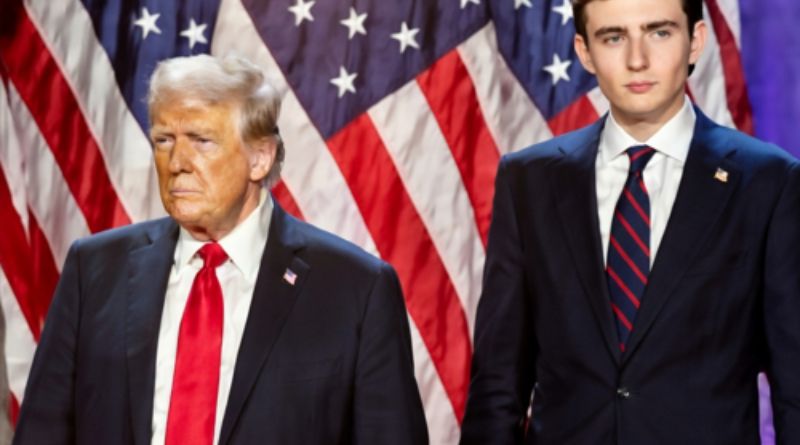
On the strategic front, Takaichi engaged with senior U.S. officials to address critical geopolitical challenges that define the current era. These high-level discussions spanned economic cooperation, supply chain security, and the maintenance of regional stability within the Indo-Pacific. Against a backdrop of shifting global dynamics, both nations reaffirmed their commitment to a partnership built on mutual trust and shared democratic values. Takaichi specifically highlighted the importance of the U.S.-Japan Security Treaty as a cornerstone for peace in the East China Sea and South China Sea. However, the visit’s most enduring image came not from a boardroom, but from a moment of cultural diplomacy hosted by the Trump administration. During the evening’s festivities, Takaichi demonstrated her mastery of social etiquette by acknowledging Barron Trump, the president’s youngest son. Observing that his birthday was approaching, she offered a culturally nuanced and warm compliment, noting his striking height and describing him as a “very tall, good-looking young gentleman.” Through a translator, she skillfully extended the praise to Donald Trump and Melania Trump, attributing the young man’s attributes to his parents. This gesture was more than a casual remark; it was a strategically sound expression of Japanese respect, acknowledging family milestones to foster a sense of mutual goodwill and deep-seated rapport. The reaction from Donald Trump was notably positive, reflecting a relaxed atmosphere that briefly overshadowed the usual rigors of international summits. Barron Trump’s physical presence has long been a topic of curiosity, and Takaichi’s direct but polite acknowledgement was seen as both observant and charming. Political analysts suggest that these “softer” elements of diplomacy are essential for building personal rapport, as they create an environment of trust that allows leaders to more effectively navigate contentious issues like maritime security and global trade negotiations. By humanizing the diplomatic process, Takaichi successfully bridged the cultural divide between the two nations. Ultimately, Sanae Takaichi’s visit underscores a vital lesson in international relations: leadership is most effective when it balances professional rigor with authentic human connections. The duality of the media coverage—focusing both on complex discussions regarding semiconductors and the charming exchange regarding family etiquette—illustrates the multifaceted nature of modern power. Takaichi proved herself a capable negotiator and a sophisticated diplomat, demonstrating that the future of the U.S.–Japan alliance is shaped as much by moments of shared humanity as it is by signed treaties and defense strategies.