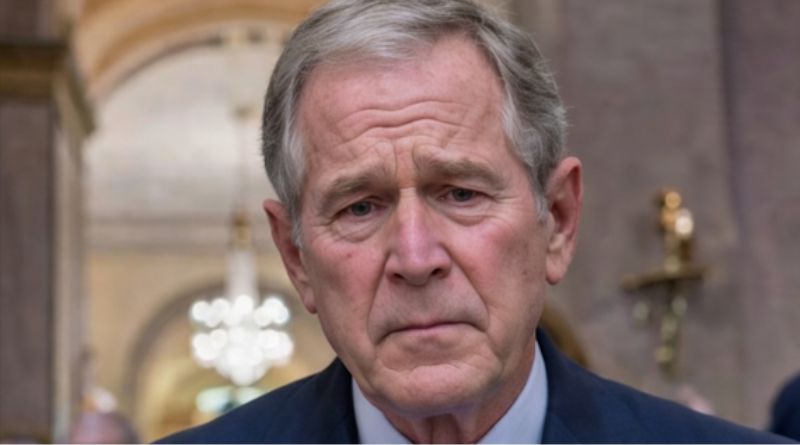
George W. Bush has spent much of his life after the presidency intentionally keeping his distance from the day-to-day battles of American politics. Unlike many former presidents who frequently appear on television or engage in partisan debates, Bush has generally avoided cable news arguments and social-media disputes. When he chooses to speak publicly, his remarks usually focus on themes such as civic responsibility, democratic values, and national unity rather than on specific policy proposals. For that reason, his recent comments drew attention—not because they were aggressive or partisan, but because of their clear concern about how the government is functioning. Speaking from the vantage point of someone who governed during moments of national crisis, Bush warned that Washington has increasingly fallen into a risky pattern: governing according to deadlines instead of careful planning. He argued that Congress has become too comfortable pushing through enormous, complicated legislation at the last possible moment, often when the government faces shutdown threats, expiring programs, or politically charged standoffs. According to Bush, this approach does not produce efficiency. Instead, it creates instability.
Bush explained that the problem is not tied to a single political party or policy agenda. Rather, he sees a broader shift in the culture of lawmaking. Massive bills, sometimes thousands of pages long, are negotiated in a rush and passed before lawmakers—or the public—have time to fully understand what they contain. In such circumstances, oversight becomes difficult and meaningful debate nearly disappears. He described these last-minute laws as carrying “hidden risks.” Provisions added late in negotiations may be buried deep in technical language, escaping careful review. While they may solve immediate political problems, they can also produce unintended consequences years later. By then, the urgency that justified the rushed decision has faded, and responsibility is harder to trace.
Drawing on his experience in the executive branch, Bush emphasized that laws rarely remain confined to the moment that created them. Policies passed under pressure can affect healthcare systems, national security strategies, economic rules, and public services long after the political crisis has passed. When those policies fail or cause harm, ordinary citizens—not politicians—often bear the consequences. Bush also spoke about the importance of institutional memory. Over time, he said, even well-intentioned laws can age poorly, especially when they were built on hurried compromises rather than careful deliberation. Some policies that once seemed necessary later reveal inefficiencies, loopholes, or inequities that require years of correction.
At the center of his warning was public trust. Bush argued that when citizens repeatedly learn that major legislation was rushed, unread, or negotiated behind closed doors, confidence in democratic institutions begins to erode. People may start to see government as reactive and chaotic instead of thoughtful and responsible. Ultimately, Bush framed the issue as one of long-term responsibility. Lawmakers, he suggested, are temporary stewards of institutions that will outlast them. Decisions made quickly to solve immediate political problems can leave lasting burdens for future leaders and citizens. His message was simple: good governance depends not on speed, but on patience, transparency, and careful judgment.