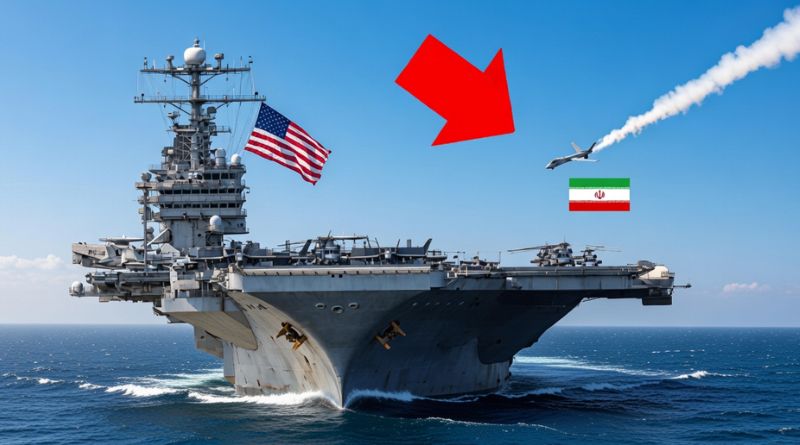
On February 19, 2026, tensions at sea escalated when Iran attempted a calculated ambush against the U.S. Navy. Iranian forces deployed a Kilo-class submarine, identified as the Tareq, as bait to lure the guided-missile cruiser USS Philippine Sea into a vulnerable position. Once the American warship closed in to track the submarine, a shore-based Nasr-1 anti-ship missile battery launched a strike from the coastline. The missile penetrated the cruiser’s defensive layers and detonated near the vessel, causing significant damage and killing five American sailors. The sudden attack confirmed that the submarine sighting had been part of a coordinated trap designed to draw the cruiser within range of Iran’s coastal missile systems.
Commanding officer Captain Harrison responded immediately, shifting from defensive posture to rapid counterattack. Rather than withdrawing, he ordered simultaneous operations against both threats: the submarine beneath the surface and the missile battery ashore. U.S. anti-submarine assets quickly moved to track and engage the Tareq, while precision strikes targeted the coastal launcher responsible for the missile attack. Within less than an hour of the initial hit—roughly fifty-four minutes after the ambush began—the situation had reversed completely.
The submarine was destroyed and sinking beneath the water. The Nasr-1 missile site had been eliminated. In addition, follow-on strikes ignited fires at three Iranian military facilities believed to be connected to the operation. What began as a carefully planned trap ended with the loss of the attacking submarine and the destruction of the supporting missile infrastructure. The clash illustrated both the risks of modern naval warfare and the speed with which engagements at sea can escalate and conclude.