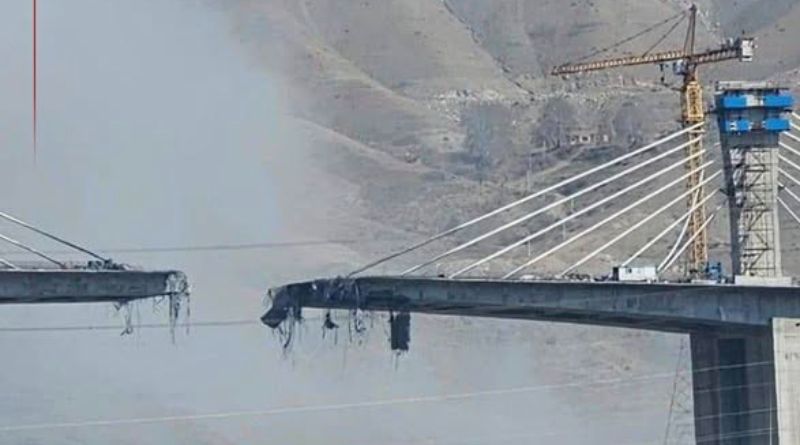
In a move drawing international attention, former President Donald Trump authorized a precision strike on a partially constructed bridge near Karaj, Iran. The bridge, intended to link Karaj with Tehran, was reportedly being used for military logistics, including the movement of troops, missiles, and drones.
While some critics have labeled the strike a potential “war crime,” military analysts emphasize that targeting infrastructure actively used for military operations is a standard tactic in modern warfare. By focusing on military rather than civilian targets, the strike aligns with established principles of international law, particularly efforts to minimize civilian casualties.
Target and Strategic Significance
The bridge was incomplete and not operational for civilian traffic at the time of the strike. Reports indicate that Iran’s Islamic Revolutionary Guard Corps (IRGC) was utilizing it to transport equipment and personnel. Disrupting this route aimed to:
- Prevent the transport of missiles, drones, and other military equipment
- Limit the rapid deployment of troops to potential launch sites
- Reduce the operational capacity of Iranian forces threatening U.S. and allied interests
Military strategists note that targeting supply lines and infrastructure is a common practice in armed conflicts worldwide and is considered a legitimate military objective when civilian exposure is minimized.
Casualties and Damage
Iranian state media reported eight deaths and roughly 100 injuries from the strike. While any loss of life is tragic, experts point out that the target was explicitly military. Footage from the incident shows the bridge partially collapsing, effectively halting its intended use and potentially slowing Iranian military operations in the region if repairs are delayed.
Context: Iran’s Military Activities
The strike comes amid ongoing concerns about Iran’s military programs, which include ballistic missile development, drone operations targeting regional adversaries, and the use of civilian infrastructure to conceal military assets. These activities have fueled international concern over Iran’s ability to project power and threaten U.S. forces and allies. By targeting a military route rather than established civilian roads, the strike aligns with strategies designed to degrade operational capacity without targeting non-combatants.
International Reactions and Strategic Implications
The strike has sparked debate among policymakers, analysts, and the public. Critics warn that any military action inside Iran risks escalation and civilian harm. Supporters highlight the operation’s precision and strategic focus. Analysts suggest the strike may serve multiple objectives:
- Deterrence: Demonstrating the ability to strike key military infrastructure
- Leverage for Diplomacy: Limiting Iran’s mobility to encourage negotiation
- Military Readiness: Testing precision strike capabilities for potential conflicts
Looking Ahead
The incident underscores the complexity of modern warfare, where military objectives must be balanced with international law and minimizing civilian impact. Precision strikes targeting enemy supply lines remain a recognized method to weaken adversary operations while maintaining diplomatic leverage.