The U.S. Supreme Court is currently considering a complex legal challenge involving former President Donald Trump’s executive order aimed at ending birthright citizenship for children born in the United States to undocumented immigrants. The case centers on how the 14th Amendment’s Citizenship Clause should be interpreted, particularly the phrase “subject to the jurisdiction thereof.”
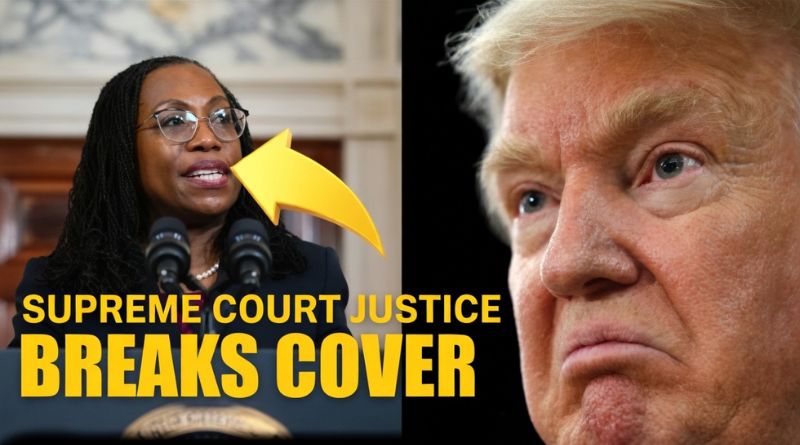
During recent oral arguments, Justice Ketanji Brown Jackson introduced a hypothetical scenario that has drawn significant attention. She asked whether a temporary visitor to another country—such as someone traveling to Japan—would still owe a form of “local allegiance” because they are required to follow that country’s laws and are protected by its legal system. Jackson used this example to explore whether undocumented immigrants living in the United States, who are also subject to U.S. laws, could be considered under its jurisdiction in a similar way. If so, their children, born on U.S. soil, might qualify for citizenship under the Constitution.
The discussion reflects a broader legal debate over how narrowly or broadly the term “jurisdiction” should be defined. Lawyers representing the Trump administration, including Solicitor General D. John Sauer, argue that jurisdiction in this context implies a deeper level of allegiance than simply being present in the country. They contend that undocumented immigrants do not meet this threshold, and therefore their children should not automatically receive citizenship.
In contrast, attorneys from the American Civil Liberties Union, including Cecilia Wang, maintain that the Constitution has historically been interpreted to grant citizenship to nearly all individuals born in the United States, regardless of their parents’ immigration status. They point to longstanding legal precedent supporting a broad understanding of jurisdiction, with only limited exceptions such as children of foreign diplomats.
Several justices, including Neil Gorsuch, also raised questions about the limits of executive authority, examining whether a president can unilaterally redefine constitutional rights through an executive order.
The outcome of the case could have far-reaching implications, not only for immigration policy but also for constitutional interpretation and the balance of power between branches of government.