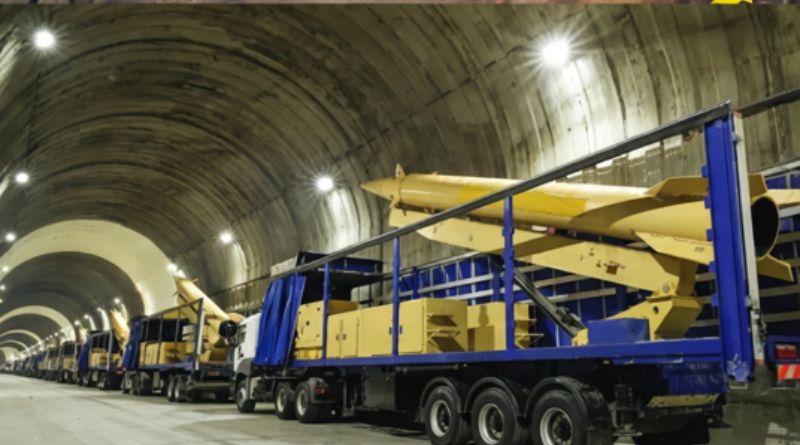
In a dramatic turn of events, Iran’s long-standing strategic illusion has been shattered. For decades, Tehran invested heavily in constructing underground missile cities and nuclear facilities deep beneath the mountains, believed to be invulnerable to any military assault. These fortifications were thought to be safe havens, capable of withstanding even the most sophisticated attacks.
Operation Epic Fury has proven otherwise. Over 72 hours, U.S. B-2, B-1, and B-52 bombers executed precision strikes on Iran’s most heavily guarded secrets, employing 30,000-pound GBU-57 Massive Ordnance Penetrators and JDAM munitions to exploit critical vulnerabilities in these subterranean strongholds. Facilities such as Fordow and Isfahan were plunged into darkness and permanently sealed, delivering a catastrophic blow to Iran’s military infrastructure.
The campaign set a new precedent in modern warfare. Estimates suggest that 80 to 90 percent of Iran’s strategic ballistic missile and drone stockpiles were vaporized. This devastating loss did not only cripple Tehran; it severed the primary logistical artery for its “Axis of Resistance” network, leaving proxy forces from Hezbollah in Lebanon to the Houthis in Yemen paralyzed.
The success of the operation hinged on more than sheer firepower. The B-2 stealth bomber, capable of evading radar detection, played a pivotal role in penetrating deep into enemy territory undetected. These bombers delivered bunker-busting ordnance designed to neutralize targets once thought invulnerable. By obliterating surface entrances and vital tunnel ventilation systems, U.S. forces rendered Iran’s underground networks useless, not merely destroying structures but also crippling operational capabilities.
The strategic targeting of these facilities showcased the effectiveness of advanced American technology and meticulous planning. The use of GBU-57 bunker busters allowed U.S. forces to strike underground missile cities with surgical precision, ensuring irreversible damage while minimizing risk to personnel. The operation highlighted the ability to strike critical assets deep within enemy territory, demonstrating unmatched U.S. airpower and tactical sophistication.
The ramifications extend far beyond Iran’s borders. With Tehran’s missile and drone capabilities severely diminished, its support for regional proxies has been significantly compromised. The “Axis of Resistance,” long reliant on Iran for logistical and operational backing, now faces unprecedented challenges. The balance of power in the Middle East has shifted, potentially altering the dynamics of regional conflicts for years to come.
Yet the long-term effects remain uncertain. History shows that military capabilities can be rebuilt, and Iran may adapt its strategies, fortifications, and underground networks in response to this setback. Analysts will closely monitor Tehran’s next moves, as the country reassesses its military posture and regional influence.
For now, Operation Epic Fury demonstrates the U.S.’s ability to project decisive power and reshape strategic realities in the Middle East. It is a stark reminder that even the most fortified defenses are vulnerable to advanced precision strikes. The immediate impact has been catastrophic for Iran and its allies, and the repercussions will reverberate across the region, challenging Tehran’s capacity to defend itself and maintain its influence.
As the dust settles, one fact is clear: the era of invulnerable underground arsenals has ended, and the Middle East’s strategic landscape has shifted dramatically. The world now watches to see how Iran will respond to this unprecedented challenge, and how the balance of power will evolve in the months and years ahead.