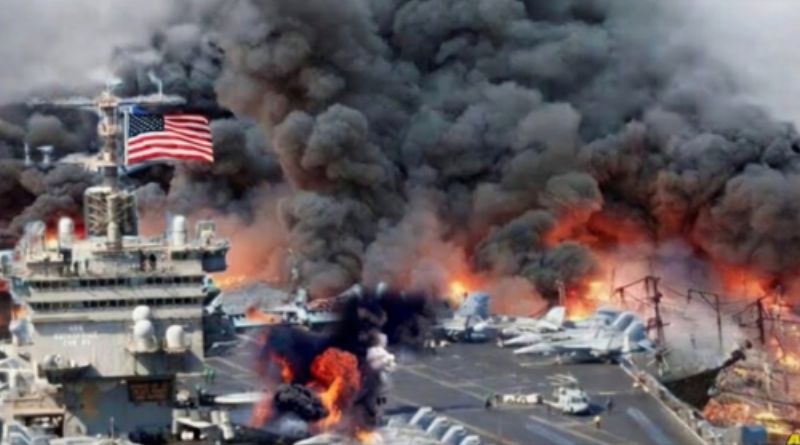
In a heightened and fictional scenario set in the Arabian Sea, a moment of calm is abruptly shattered aboard the USS Gerald R. Ford, the most advanced aircraft carrier in the United States Navy. Without warning, missile detection alarms pierce the silence as a coordinated attack unfolds. Iran has launched eight missiles toward the carrier, including a single Khorramshahr missile warhead concealed among seven decoys. This tactic is designed to overwhelm defenses and create uncertainty in the ship’s response systems.
The carrier’s defensive backbone, the Aegis Combat System, immediately activates. Interceptors are launched in rapid succession, each attempting to distinguish between real threats and false targets. As the system engages, tension escalates—the number of available interceptors steadily drops until none remain, leaving two incoming missiles still on course.
Amid the chaos, Lieutenant Rachel Webb notices a subtle anomaly: a slight variation in the exhaust plume of one missile, measured at just 0.3 percent. Though nearly imperceptible, this detail could indicate the real warhead. While senior officers focus on broader tactical decisions, Webb concentrates on this single contact, understanding that identifying the true threat could be critical. Her vigilance highlights the enduring importance of human judgment in technologically advanced combat environments.
This scenario underscores the evolving nature of modern naval warfare. The Arabian Sea, already a region of strategic importance, becomes a stage for increasingly sophisticated military tactics. The use of decoys alongside a real warhead demonstrates how adversaries aim to exploit the limits of even the most advanced defense systems. It reflects a broader trend in which offensive capabilities—particularly missile technology—are advancing rapidly, challenging traditional defensive strategies.
At the same time, the scenario illustrates the strengths and vulnerabilities of systems like Aegis. While capable of tracking and engaging multiple threats simultaneously, such systems can still be strained by saturation attacks that force rapid decision-making under pressure. The balance between automation and human oversight becomes especially critical in these moments.
If the carrier successfully neutralizes the attack, it would reinforce confidence in modern naval defenses and send a strong deterrent message. However, failure to intercept the missiles could have far-reaching consequences, potentially shifting regional power dynamics and encouraging further aggression.
Ultimately, this fictional engagement highlights a central reality of modern conflict: technological superiority alone is not enough. Success depends on the integration of advanced systems, strategic awareness, and human insight. As threats continue to evolve, so too must the methods used to counter them, ensuring preparedness in an increasingly complex and uncertain global landscape.