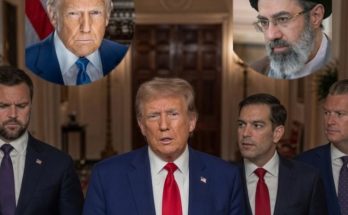
President Donald Trump’s decision to impose an energy blockade on Cuba is intended to weaken the country’s communist government, which many analysts believe is already struggling to maintain power. The policy is aimed at cutting off fuel supplies to the island, increasing pressure on leaders in Havana at a time when the government faces severe economic and social challenges. The consequences are being felt across Cuba’s population of roughly 10 million people. The fuel restrictions are worsening a decades-long economic crisis, making daily life more difficult for ordinary citizens. Shortages of food, medicine, and basic supplies have intensified, and disruptions in energy supplies are also affecting access to clean water and essential services. According to Sebastián Arcos , interim director of the Cuban Research Institute at Florida International University, the situation inside the country is becoming increasingly unstable. He said that several health crises are spreading among the population while the government is tightening its control as it feels greater pressure from outside forces.
“There are a number of epidemics moving through the population right now,” Arcos said. “At the same time, repression is increasing because the regime feels cornered, and it has not shown any willingness to negotiate with the United States.” Despite the government’s history of surviving difficult circumstances, Arcos believes the current crisis may be different. Cuban leaders have managed to endure previous economic collapses and international pressure, but he suggested the combination of internal hardship and external pressure may prove harder to overcome. Trump recently suggested that the United States might pursue what he described as a “friendly takeover” of Cuba. He implied that a potential approach could resemble U.S. policy toward Venezuela, where changes within the military leadership were encouraged while the broader state structure remained in place, accompanied by demands for greater economic cooperation.
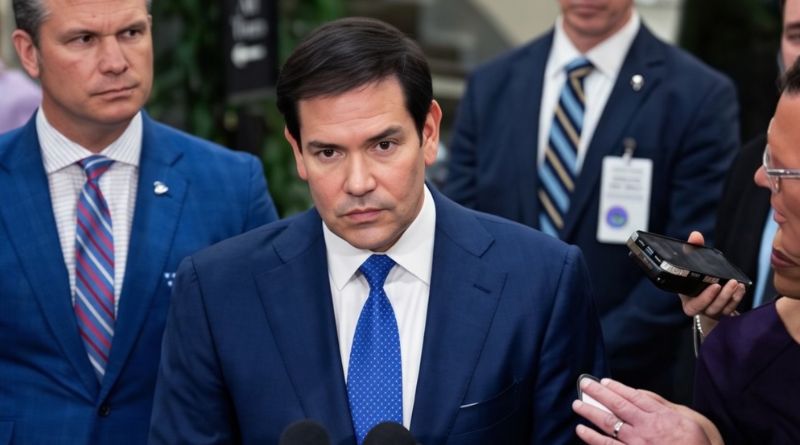
Secretary of State Marco Rubio is reportedly playing a central role in shaping the administration’s strategy toward Cuba. Reports indicate he has been communicating with Raúl Guillermo Rodríguez Castro, the grandson of former Cuban leader Raúl Castro. Rodríguez Castro is believed to serve as his grandfather’s bodyguard and is widely thought to hold influence within GAESA, the powerful conglomerate that oversees Cuba’s armed forces and controls significant portions of the island’s economy. The Miami Herald previously reported that GAESA held an estimated $18 billion in assets and financial accounts that were largely unknown publicly as of 2024. Discussions between Rubio and Rodríguez Castro reportedly occurred during a regional Caribbean conference hosted by CARICOM in St. Kitts and Nevis. While the administration is pushing for changes in Cuba, Rubio indicated that Washington is not necessarily demanding immediate regime change. Instead, he suggested that political and economic reforms could happen gradually over time.