In the evolving landscape of modern warfare, technological advancements continue to reshape how conflicts are understood and conducted. Among these developments, deep-penetrating munitions—often referred to as “bunker busters”—stand out as a significant, though not decisive, shift in military capability. Their growing precision and power are influencing strategic calculations, particularly in sensitive regions such as the Strait of Hormuz.
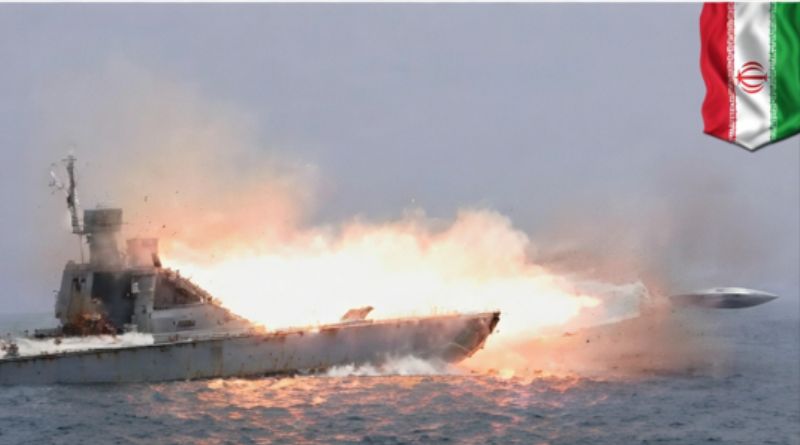
This narrow waterway remains one of the most critical chokepoints in the global energy system, with a substantial portion of the world’s oil shipments passing through it each day. Its geographic constraints make maritime traffic especially vulnerable to disruption. For years, Iran has leveraged this vulnerability through an asymmetric strategy built on mobility, concealment, and redundancy. Rather than relying solely on conventional naval strength, Iran has developed a network of fast attack boats, coastal missile systems, naval mines, and underground facilities designed to complicate any direct confrontation.
It is within this context that deep-penetrating munitions have gained renewed strategic relevance. Weapons such as the GBU-57 Massive Ordnance Penetrator are engineered to strike hardened and deeply buried targets that were once considered relatively secure. By penetrating layers of reinforced material before detonation, they offer the ability to threaten underground command centers, storage depots, and missile launch infrastructure.
However, while these capabilities expand the range of potential targets, they do not fundamentally eliminate the challenges posed by Iran’s approach. The country’s military strategy is deliberately decentralized, with many assets designed to be mobile or concealed across a wide area. As a result, even highly advanced munitions cannot guarantee the complete neutralization of threats in a single operation. Instead, they introduce a new layer of pressure that both sides must factor into their planning.
From a strategic perspective, the most immediate impact of these weapons lies in deterrence and signaling. The ability to reach previously protected facilities reduces the sense of security associated with hardened infrastructure. This may force adversaries to reconsider how and where they position critical assets. At the same time, such capabilities can serve as a demonstration of technological reach, influencing perceptions without necessarily being used at scale.
Yet history suggests that military innovations rarely produce lasting advantages on their own. Instead, they tend to trigger cycles of adaptation. In response to enhanced strike capabilities, Iran may further emphasize mobility, dispersal, and the use of proxy forces to maintain its influence. Investments in electronic warfare, cyber operations, and alternative methods of disruption could also become more prominent.
The broader implications extend beyond the immediate region. Stability in the Strait of Hormuz is closely tied to global economic confidence, and any shift in the perceived balance of power can influence markets and international policy decisions. While advanced munitions may strengthen deterrence in the short term, they also raise the stakes by increasing the potential consequences of miscalculation.
Ultimately, the emergence of more sophisticated deep-strike capabilities reflects a wider transformation in modern conflict. Precision, intelligence integration, and the ability to target hardened positions are becoming as important as traditional measures of military strength. However, these tools do not simplify the strategic environment. Instead, they add complexity, reinforcing the reality that control over critical regions is shaped not by any single innovation, but by an ongoing process of competition, adaptation, and restraint.