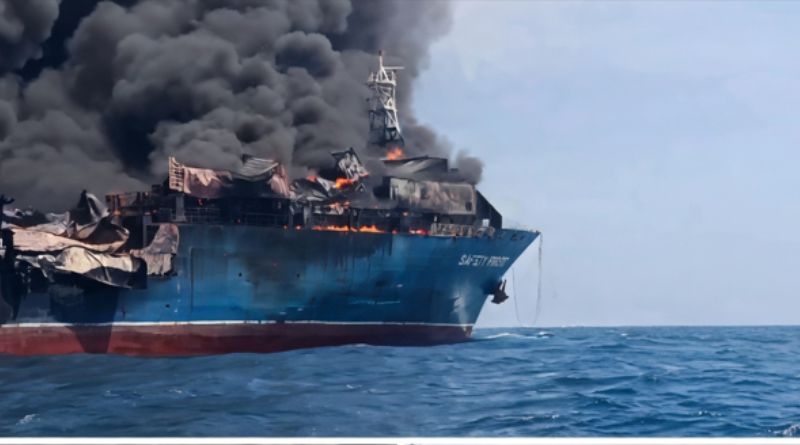
Tensions in the Middle East have escalated following reports that Iranian forces attacked a Thai container ship in the strategically vital Strait of Hormuz. The alleged incident, which reportedly caused damage to the vessel and triggered a fire onboard, has raised fresh concerns about the stability of global energy supplies and the safety of international shipping routes. The report, published by Iran Insight, included video footage showing a burning container ship with the name “SAFESEA” partially obscured. However, the exact location of the घटना and the authenticity of the footage have not yet been independently verified, leaving some uncertainty about the details. Despite this, the claims have added to growing anxiety over maritime security in the region.
According to statements attributed to the Islamic Revolutionary Guard Corps (IRGC), Iran has effectively restricted passage through the Strait of Hormuz for what it calls “unfriendly” vessels. These reportedly include ships linked to countries aligned with the United States and Israel. The IRGC has warned that any unauthorized attempts to navigate the waterway could be met with force, signaling a potentially more aggressive posture in the region.
This reported attack is not an isolated incident. In recent weeks, several vessels operating in or near the strait have allegedly been targeted or damaged, including the Thai bulk carrier Mayuree Naree. Such developments suggest a pattern of increased risk for commercial shipping, particularly for ships perceived to have connections with Western or allied nations.
The Strait of Hormuz is one of the most critical chokepoints in the global energy system. A significant portion of the world’s oil and liquefied natural gas exports passes through this narrow corridor. As a result, even limited disruptions can have immediate and far-reaching effects on global markets. Following the latest reports, oil prices have already begun to rise, reflecting investor concerns about supply constraints.
Energy analysts warn that if tensions persist or escalate further, crude oil prices could climb significantly, potentially exceeding $100 per barrel. In more moderate scenarios, prices are expected to fluctuate within the $95 to $110 range. Historically, short-term disruptions in the strait tend to cause sharp price spikes, followed by partial corrections if the situation stabilizes. However, prolonged instability could lead to sustained high prices and ongoing supply challenges.
Iran has indicated that certain “friendly” countries may still be allowed to transit the strait, although it has not clearly defined the criteria. Observers generally interpret this as referring to nations maintaining cooperative relations with Tehran, such as China and Russia.
Meanwhile, international efforts to ease tensions are beginning to take shape. French President Emmanuel Macron has proposed initiatives aimed at restoring safe navigation in the Strait of Hormuz. European officials are also exploring the possibility of establishing a protected maritime corridor, similar to arrangements used in other conflict zones.
As the situation continues to develop, the risk of broader economic and geopolitical consequences remains high.