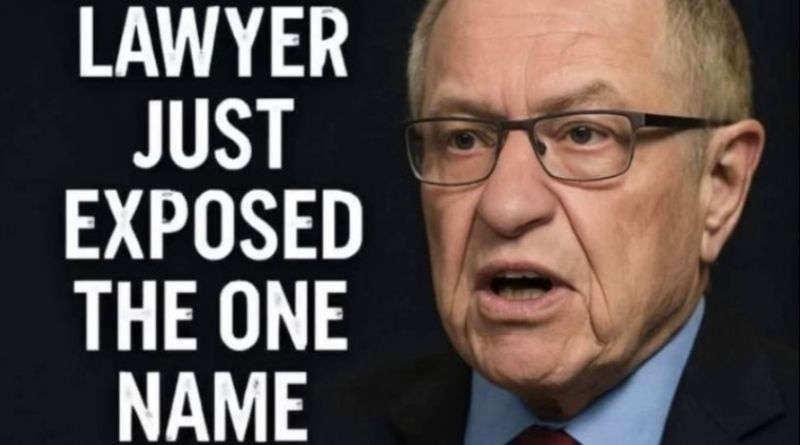
Alan Dershowitz, Jeffrey Epstein’s former lawyer, has said that two New York courts—not the Trump administration—are responsible for withholding information related to Epstein’s case. His remarks come amid scrutiny of President Donald Trump and the Justice Department (DOJ) over their handling of Epstein-related documents.
Dershowitz, who helped secure Epstein’s controversial 2008 plea deal, stressed that there is no “client list” identifying people who allegedly interacted with Epstein. What exists, he said, is a redacted FBI affidavit containing accusations from Epstein’s accusers. During an interview with Chris Cuomo on NewsNation, he clarified that the redacted names are of people accused of sexual misconduct, but none are currently holding public office. Some were formerly in office, and some are deceased.
“I cannot disclose more because of judicial orders,” Dershowitz said. “The suppression is largely to protect alleged victims. Pam Bondi and President Trump are not responsible for the redactions.” He noted that while the media has focused on potential undisclosed names, the vast majority of individuals mentioned in Epstein-related files are already publicly known through books, news articles, and prior reporting.
Dershowitz explained that although he personally knows who is referenced in the redacted documents, he is bound by court orders that prohibit him from sharing the information. “If someone wanted the redactions removed, they could seek it in court,” he added. “But the blame for anything being withheld belongs to the judges, not the Trump administration.”
Earlier this month, the Trump administration sought to release grand jury transcripts from Florida tied to Epstein’s original federal investigation in 2005 and 2007. The effort was part of a broader push for transparency regarding Epstein’s sex trafficking network. However, U.S. District Judge Robin Rosenberg rejected the request, citing federal law under the Eleventh Circuit that prevents her from granting the release. “The Court’s hands are tied—a point the Government concedes,” Rosenberg wrote in a 12-page opinion.
In a separate case, a Manhattan judge similarly denied a request from Epstein associate Ghislaine Maxwell to unseal documents. Both rulings highlight the limitations courts face in releasing sensitive information connected to ongoing or past investigations.
Dershowitz’s statements underscore that, according to him, the courts—not the executive branch—control what Epstein-related material can be disclosed. While public curiosity about potential high-profile names persists, the legal framework continues to prioritize protections for alleged victims, leaving much of the information still sealed.