A growing wave of political outrage is sweeping across New York City as Mayor Zohran Mamdani finds himself at the center of an intensifying backlash—one that extends far beyond traditional political opposition. This time, the loudest criticism is coming from everyday homeowners, many of whom once supported his campaign and believed in his promises of affordability and economic fairness.
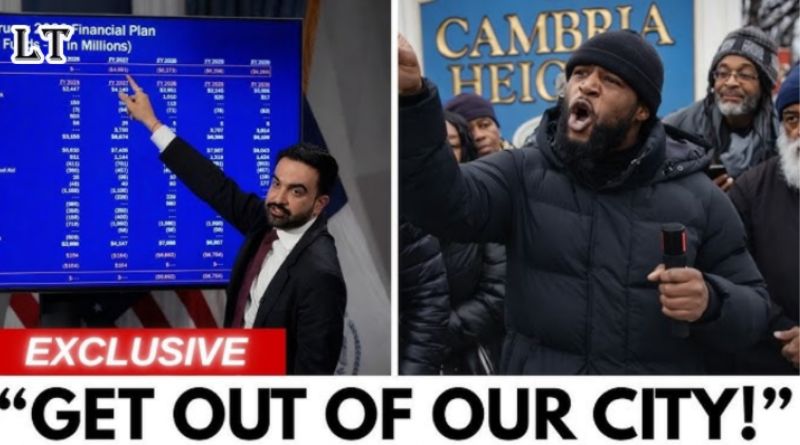
At the heart of the controversy is a proposed 9.5% increase in property taxes, included in a sweeping $127 billion city budget aimed at addressing a $5.4 billion deficit. City officials argue that the measure is necessary to stabilize finances amid rising costs, economic uncertainty, and long-term obligations. However, for many residents, particularly in boroughs like Queens, the proposal feels less like a policy solution and more like a direct threat to their financial security.
In neighborhoods such as Cambria Heights, the reaction has been immediate and deeply personal. Homeowners—many from long-established Black and Brown communities—are expressing fear, frustration, and anger. For these families, owning a home is not just about property value; it represents decades of hard work, stability, and generational progress. The idea that a sudden increase in taxes could jeopardize that stability has struck a nerve.
Critics argue that the proposal stands in sharp contrast to the mayor’s campaign message. During his run for office, Mamdani positioned himself as a champion of working-class New Yorkers, promising to address affordability and reduce the financial burden on ordinary families. Now, opponents claim that the tax increase undermines those commitments, raising questions about whether campaign ideals are being sacrificed in the face of fiscal realities.
On the other side, supporters of the mayor emphasize the complexity of the situation. They note that New York City’s financial challenges are not new and cannot be resolved without difficult decisions. Rising operational costs, infrastructure needs, and essential public services all require funding. From this perspective, the proposed tax increase is not a betrayal but a necessary, if unpopular, step to prevent deeper financial instability that could ultimately harm even more residents.
Yet for many homeowners, these explanations do little to ease concerns. A 9.5% increase in property taxes can translate into thousands of additional dollars annually. For families already coping with rising expenses—such as groceries, utilities, healthcare, and insurance—the added burden feels overwhelming. Many fear they are being pushed to a breaking point.
Community meetings throughout Queens have become increasingly tense, reflecting the emotional weight of the issue. Residents speak openly about difficult choices: cutting back on essentials, taking on additional work, or even selling homes that have been in their families for generations. The fear of displacement is not hypothetical—it is grounded in past experiences where economic pressures have reshaped neighborhoods and forced long-time residents out.
Beyond individual concerns, the proposal has sparked broader questions about the future of New York City. Housing affordability has long been a defining issue, and property taxes play a major role in determining who can afford to stay. Critics warn that such increases could accelerate ongoing trends, making the city less accessible to middle- and working-class families while contributing to the gradual transformation of neighborhoods into enclaves for wealthier residents.
Political analysts suggest that the intensity of the backlash could carry significant consequences for Mamdani’s leadership. Public trust is a critical component of governance, especially in a city known for its active and vocal electorate. When dissatisfaction arises not only from opponents but also from core supporters, it signals deeper challenges that extend beyond a single policy decision.
At the same time, the mayor’s administration faces a difficult balancing act. Addressing the city’s financial needs while protecting residents from economic strain is a complex and delicate task. Any decision—whether to proceed with, modify, or abandon the tax increase—will carry consequences.
Complicating matters further is the broader national context. Cities across the United States are grappling with similar issues, including budget deficits and housing crises. However, New York City’s size, diversity, and economic significance amplify the stakes. Decisions made here often influence policy debates elsewhere, making this situation one of wider importance.
For residents in Queens and across the city, however, the issue remains deeply personal. It is about preserving their homes, their communities, and their sense of stability in an increasingly uncertain economic environment. It is also about trust—trust that elected leaders will prioritize the needs of those they represent.
As the debate continues, one thing is clear: this is more than a routine budget discussion. It is a defining moment that highlights deeper tensions around affordability, equity, and political accountability. The outcome will not only shape the city’s financial future but also determine whether many families can continue to call New York City home.