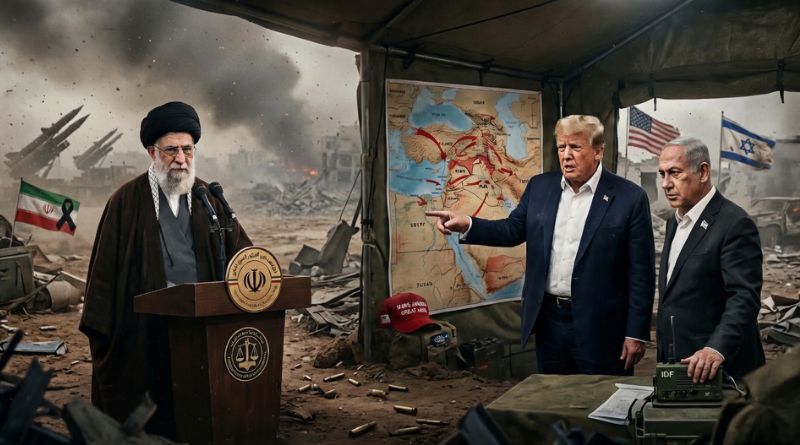
In 2025, Israel faced a series of attacks that heightened tensions in the region. Reports confirmed several incidents targeting civilians and infrastructure, though there was no large-scale invasion. Notable attacks included the December 26 Harod Valley incident, a combined vehicle-ramming and stabbing attack that killed two civilians and injured others. In southern Israel, the city of Eilat was struck by a drone attack launched by Yemen’s Houthi forces in September, wounding about 22 people. Earlier, in May, a Houthi ballistic missile hit near Tel Aviv’s Ben Gurion Airport, injuring eight and causing flight disruptions.
These events were part of a broader pattern of violence involving terrorist attacks, missile strikes, and drone operations. The escalation also involved direct military confrontation between Israel and Iran. In June 2025, Israel conducted strikes on Iranian nuclear and military sites, prompting retaliatory actions. This confrontation marked one of the most significant clashes between the two countries in recent decades.
Beyond Israel and Iran, regional actors, including the Houthis in Yemen, contributed to the ongoing instability. Their attacks on Israeli territory and shipping routes further complicated the security situation. While these attacks were serious, Israel maintained control and responded with military measures to mitigate threats.
It is important to clarify that some claims circulating online, such as imminent Iranian strikes on the United States, have no verification from credible sources. The situation in 2025 involved localized attacks and military escalations, not a full-scale war or an immediate threat to American territory.
Overall, Israel’s experience in 2025 reflects a volatile mix of terrorism, regional hostilities, and strategic military operations. The country continues to face security challenges, while the wider Middle East grapples with the political, humanitarian, and economic consequences of ongoing conflicts.