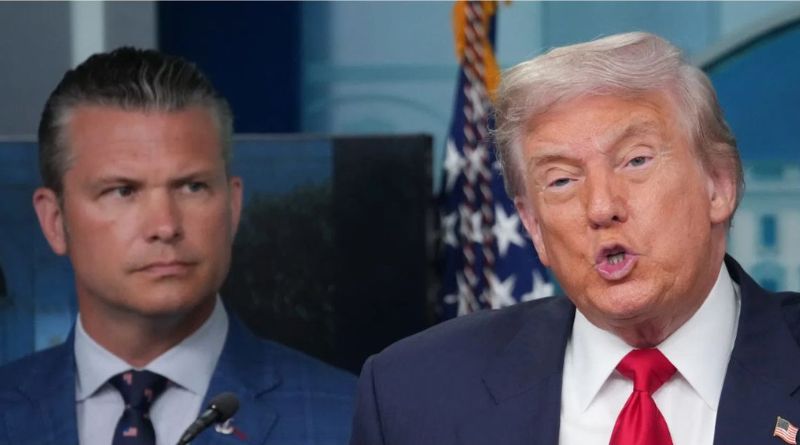
President Donald Trump voiced strong opposition to Iran’s appointment of Mojtaba Khamenei as supreme leader following the reported death of his father, Ali Khamenei, in an airstrike linked to Operation Epic Fury. Trump stated that Mojtaba Khamenei would be unable to “live in peace” under current conditions and claimed that U.S. military operations have already exceeded expectations. According to him, joint U.S. and Israeli efforts have delivered results far beyond initial projections at this early phase.
In a post on Truth Social, Trump warned Iran against interfering with oil shipments through the strategically vital Strait of Hormuz. He cautioned that any disruption would trigger retaliation “twenty times harder.” While emphasizing that he does not seek further escalation, Trump added that the U.S. could target critical infrastructure in ways that would severely hinder Iran’s ability to rebuild. Operation Epic Fury, launched on February 28 by U.S. and Israeli forces, has reportedly struck thousands of targets across Iran. According to United States Central Command, early operations hit command centers, missile facilities, air defense systems, and key naval assets.
U.S. Defense Secretary Pete Hegseth described the campaign as “highly successful,” stating that more than 7,000 targets have been hit so far. He claimed Iran’s air defenses have been largely neutralized, its missile production capabilities significantly weakened, and its naval forces severely degraded. Hegseth also noted a sharp decline—around 90%—in missile and drone attacks against U.S. forces, attributing this to sustained military pressure. He argued that the campaign has disrupted what he described as Iran’s long-standing network of military and proxy operations, calling it a decisive effort to counter a persistent global threat.