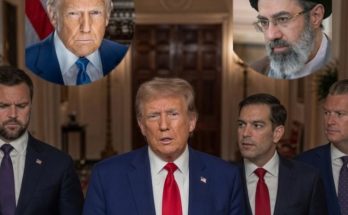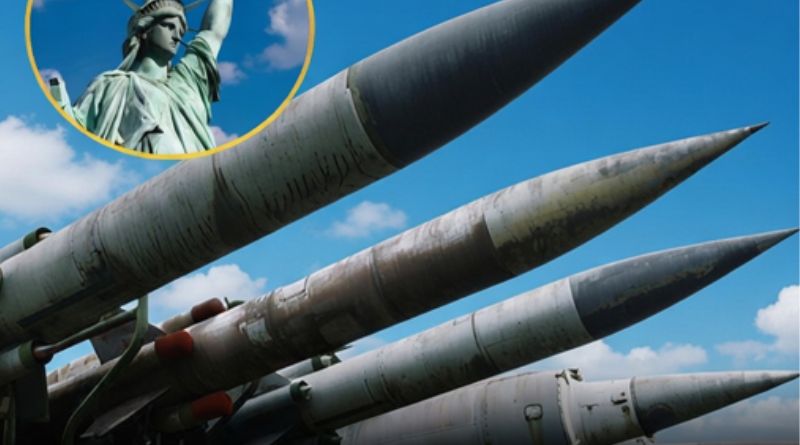
The Donald Trump administration’s “America First” rhetoric, promising reduced foreign entanglement, was nonetheless accompanied by aggressive tactics and unpredictable policies, fostering global uncertainty. This climate shifted public curiosity from “if” to “what if” a global war occurred, reflecting a loss of confidence in peace and the understanding that conflicts often arise from miscalculations. Modern global war, particularly involving nuclear weapons, would fundamentally alter civilization. While deterrence theory and arms control are crucial safeguards, their ultimate reliance on fallible human decision-making remains a key vulnerability.
Experts, including nuclear historian Alex Wellerstein, clarify that popular imagination often misidentifies primary nuclear targets. Modern strategy prioritizes capability over symbolism; initial strikes would focus on disabling an adversary’s ability to respond rather than major population centers. For a major nuclear power, this means hitting command-and-control centers and intercontinental ballistic missile sites to limit retaliation. This highlights communities near critical military infrastructure: Great Falls, Montana (near Malmstrom Air Force Base), Cheyenne, Wyoming (near Francis E. Warren Air Force Base), and Ogden/Clearfield, Utah (near Hill Air Force Base). These locations, despite modest size, are strategically vital due to embedded infrastructure.
Further key U.S. sites include Shreveport, Louisiana (Barksdale Air Force Base); Honolulu, Hawaii (a Pacific defense hub); Omaha, Nebraska (Offutt Air Force Base); and Colorado Springs (hosting NORAD). Albuquerque, New Mexico, with Kirtland Air Force Base, holds significant nuclear infrastructure. While these infrastructure-rich areas are primary targets, major metropolitan centers like Washington, D.C., New York City, and Los Angeles remain vulnerable due to political and economic significance, though possibly targeted later. This unsettling reality underscores the inseparable nature of civilian life and military geography, where communities exist alongside defense systems.
This analysis, experts stress, is for awareness, not prediction. Robust deterrence, communication, and diplomatic backstops exist, yet peace is fragile. Human factors—misread intentions, technological glitches, and political ego—inject uncertainty into systems demanding precision. Understanding these dynamics is crucial for demystifying anxieties and reinforcing diplomacy, restraint, and communication. Peace is an active process requiring constant vigilance, as the consequences of failure are beyond calculation and could reshape civilization itself.