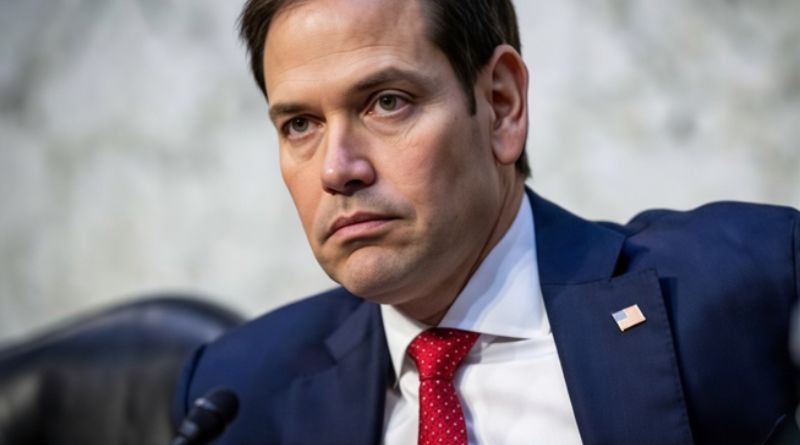
A federal judge has greenlit a lawsuit against U.S. Secretary of State Marco Rubio, challenging prolonged delays in processing EB-1A visa applications. Three foreign nationals—a Kazakh metallurgist, a Russian project manager, and a Russian makeup artist—sued after their “extraordinary abilities” visa petitions were stuck in administrative processing for over 16 months under § 221(g) of the Immigration and Nationality Act. The plaintiffs, including Lyazat Tolymbekova who faced separation from her U.S. citizen daughter during a medical crisis, argue these delays have caused severe personal and professional hardships.
Magistrate Judge Zia M. Faruqui rejected the government’s motion to dismiss, which invoked consular nonreviewability and sovereign immunity. Judge Faruqui ruled that a § 221(g) refusal is not a final decision, thus voiding the nonreviewability argument, and found the Administrative Procedure Act (APA) waives immunity for injunctive relief. He asserted the State Department holds a “clear, nondiscretionary duty” to act on visa applications, a duty it failed to fulfill. Citing the Accardi doctrine, the ruling permits the case to advance, potentially leading to a court order for a final visa decision.
In a separate development, President Trump engaged in a “positive” 30-minute phone call with Brazilian President Luiz Inacio Lula da Silva, promising an imminent in-person meeting. Lula urged Trump to eliminate the 40% tax on Brazilian exports and lift U.S. restrictions on local governments. Brazilian markets closely monitor these discussions, as Brazil endures some of the world’s highest tariffs, initially 10% but escalated to 40% by the Trump administration on key exports.
These tariffs, bringing the total tax to 50%, were imposed by Trump as retaliation for what he described as a “witch hunt” against his ally, former Brazilian President Jair Bolsonaro, who was convicted for a coup attempt. The Trump administration also previously used the Magnitsky Act against Brazilian Supreme Court Justice Alexandre de Moraes and revoked visas of six high-ranking officials. Lula had previously criticized such “one-sided and arbitrary actions” at the U.N. General Assembly.