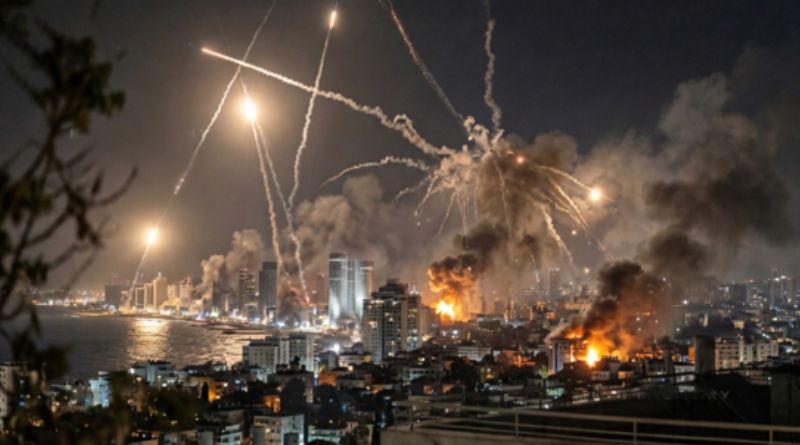
The Middle East has once again become the center of global attention as tensions between Iran and Israel continue to intensify. Recent developments have raised serious concerns about the possibility of a broader regional conflict, particularly with the growing involvement of Hezbollah. The situation has escalated significantly after Iran launched a series of missile and drone strikes targeting Israeli territory. These attacks represent more than isolated incidents; they signal a coordinated effort by Tehran to demonstrate its military reach and respond to perceived threats in the region.
Iran’s military capabilities have expanded considerably in recent years. The country has invested heavily in advanced missile systems and drone technology, allowing it to conduct long-range strikes with increasing precision. Reports suggest that some of the recent attacks targeted Israeli military facilities and strategic infrastructure, highlighting Iran’s ability to project power far beyond its borders. The involvement of Hezbollah adds a dangerous new dimension to the conflict. Based in Lebanon and widely regarded as one of the most powerful non-state military groups in the region, Hezbollah has long maintained close ties with Iran. Its participation raises fears of a second front opening against Israel from the north. Hezbollah possesses a large arsenal of rockets and missiles and has significant combat experience from past conflicts. If the group intensifies its attacks, Israel could face simultaneous threats from multiple directions, placing additional strain on its defense systems.
In response, Israel has increased its military operations, including strikes against Iranian-linked positions in Syria and efforts to weaken Hezbollah’s capabilities in Lebanon. These actions reflect Israel’s determination to prevent its adversaries from strengthening their foothold near its borders. The risk of a wider regional war remains a major concern. Countries such as Saudi Arabia and several Gulf states closely monitor Iran’s actions, viewing them as a potential threat to regional stability. Meanwhile, global powers like the United States and Russia also have strategic interests in the region, adding further complexity to the situation. As tensions rise, diplomatic efforts may prove critical in preventing further escalation. For millions of people across the Middle East, the hope remains that dialogue and restraint can prevail over conflict.