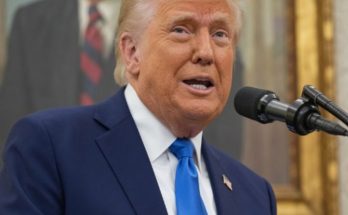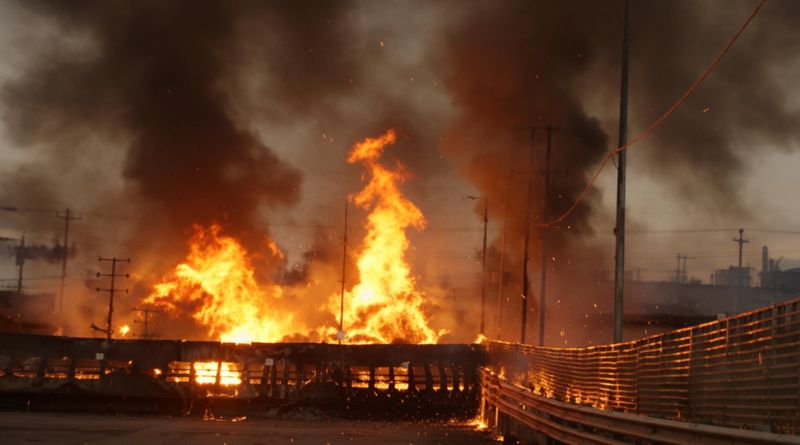
The Strait of Hormuz crisis intensified after the United States and Israel launched coordinated airstrikes across Iran. The operation reportedly targeted Islamic Revolutionary Guard Corps command centers, missile facilities, and air defense systems. Officials also said the strikes hit nuclear-related facilities and key government infrastructure. Reported locations included Tehran, Isfahan, Qom, Kermanshah, and Karaj. U.S. President Donald Trump described the operation as necessary to remove “imminent threats.” Meanwhile, Israeli Prime Minister Benjamin Netanyahu characterized the strikes as a preemptive act of self-defense. Some Israeli reports suggested the attack may have killed Iran’s Supreme Leader Ali Khamenei. However, Iranian state media quickly rejected those claims, saying he was “safe and sound.”
Strait of Hormuz Crisis Deepens After Iran’s Response Iran responded quickly with ballistic missiles and drones targeting Israel and several U.S. military facilities across the Middle East. The reported targets included bases in Qatar, the United Arab Emirates, Bahrain, Kuwait, Jordan, Iraq, and Saudi Arabia. Explosions were reported in multiple Gulf cities, raising fears of a broader regional conflict. The crisis escalated further when Iran’s naval forces issued warnings to commercial ships passing through the Strait of Hormuz. Broadcast messages declared that passage through the waterway was “not allowed.”
Several vessels reported receiving these warnings through maritime emergency communication channels. European and British maritime security missions later confirmed the broadcasts. Global Energy and Economic Impact The strait handles around 20–21 million barrels of oil per day, representing roughly one-fifth of global oil consumption. Major exporters using the route include Saudi Arabia, Iraq, the United Arab Emirates, Kuwait, and Qatar. Analysts warn that prolonged disruption could drive oil prices significantly higher. Some forecasts suggest prices could reach $100 per barrel, while more severe disruptions could push them toward $120 or even $150.