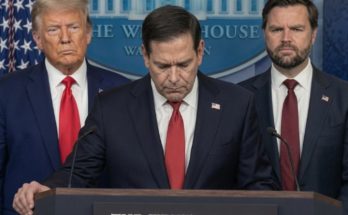
The situation also raises larger questions about how internal disagreements are handled in modern administrations, particularly under high-pressure political environments shaped by figures like Donald Trump. Historically, senior officials have often played a critical role in challenging decisions behind the scenes, offering legal, strategic, or ethical counterpoints before policies are finalized. In this case, however, the rapid escalation from disagreement to dismissal suggests a narrower margin for internal debate.
Several former government officials and analysts note that friction between political leadership and career or appointed experts is not unusual. What stands out here is the speed and finality of the outcome. Rather than a prolonged negotiation or compromise, the reported shift from objection to removal appears to have happened in a matter of days, reinforcing the perception that unity—at least publicly and operationally—is being prioritized above all else.
This could have lasting implications for how policy is shaped going forward. If senior staff perceive that pushback carries significant professional risk, decision-making processes may become more centralized, with fewer competing viewpoints presented at critical moments. Some governance experts argue that this can streamline execution, while others caution it may reduce the depth of internal scrutiny that complex policies often require.
Politically, the episode is already feeding into broader narratives about leadership style. Supporters frame it as a necessary assertion of authority in a polarized environment, where hesitation or internal resistance could weaken an administration’s ability to act decisively. Critics, meanwhile, see it as part of a pattern that places a premium on personal loyalty, potentially at the expense of institutional norms and independent expertise.
There are also practical considerations. Replacing a senior official is not just a symbolic move—it can disrupt ongoing initiatives, delay decision-making timelines, and shift internal dynamics across entire departments. Staff who worked closely with the departing figure may need to recalibrate quickly, adapting to new leadership styles and expectations while maintaining continuity in their work.
As attention turns to the incoming replacement, the choice itself may send a powerful signal. A nominee known for strict alignment with leadership priorities could reinforce the current trajectory, while someone with a reputation for independent thinking might suggest a recalibration. Either way, the appointment will be closely scrutinized not just for qualifications, but for what it reveals about the administration’s internal culture.
In the broader scope of Washington politics, moments like this often have ripple effects beyond a single office. They influence how future appointees approach their roles, how agencies interact with leadership, and how policy disagreements are navigated in the months ahead. For now, the message coming out of this episode appears unmistakable: in this political environment, the cost of defiance can be immediate—and decisive.