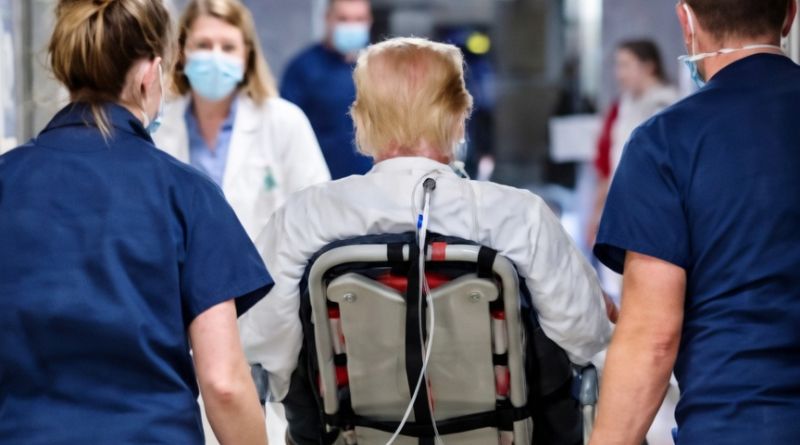
In today’s rapidly evolving digital environment, information about well-known public figures can spread across the globe in a matter of minutes. This is especially true when the topic involves health, as such reports tend to generate immediate concern, intense speculation, and widespread discussion. Recently, unverified claims began circulating online suggesting that Donald Trump had been hospitalized following a sudden medical issue. Although these rumors quickly gained traction, they highlight the critical importance of relying on verified information and approaching such stories with caution.
The initial claims appeared on social media, alleging that Trump had been transported to a medical facility—frequently identified as Walter Reed National Military Medical Center—after experiencing unspecified symptoms. Some posts described the situation as urgent, while others framed it as a precautionary evaluation. However, these reports were not supported by any official confirmation at the time. Instead, they emerged during a routine White House “press lid,” a standard announcement indicating that no further public appearances or events were scheduled for the remainder of the day.
This routine procedural update appears to have been misinterpreted by some users, who connected it to unrelated or outdated visual content circulating online. Old footage and images were reposted and presented as current evidence, further fueling speculation. In the absence of clear, immediate details, these fragments of information were quickly assembled into a narrative suggesting a potential health emergency, despite lacking factual grounding.
In response to the growing rumors, the White House issued a clear and direct denial. Officials stated that Trump had not been hospitalized and remained at the White House, continuing his regular activities throughout the Easter weekend. They described the circulating claims as unfounded and emphasized that no emergency had occurred. Trump’s ongoing activity on social media platforms also served as visible reassurance that he was not undergoing any medical crisis.
This situation illustrates how quickly misinformation can spread, particularly when it involves a figure who commands significant public attention. Trump’s status as a prominent political leader ensures that any development related to his health is closely monitored and widely discussed. As a result, even minor or routine updates—such as a press lid—can be interpreted as signals of something more serious, especially when combined with the rapid amplification mechanisms of social media platforms.
Another important factor in the spread of such stories is the emotional response they generate. Health-related news tends to evoke concern, curiosity, and strong reactions, all of which contribute to higher engagement online. Algorithms often prioritize content that attracts attention, meaning that posts expressing urgency or alarm are more likely to be widely shared. This creates an environment where unverified claims can quickly gain visibility before accurate information becomes available.
It is also important to understand that medical evaluations for high-profile individuals are not uncommon and do not necessarily indicate serious health issues. Leaders in demanding roles often undergo routine monitoring and precautionary assessments to ensure their well-being and readiness. These may include basic diagnostic tests, observation, and vital sign monitoring. However, in this particular case, there was no confirmed medical visit or evaluation, reinforcing the conclusion that the reports were driven primarily by speculation rather than fact.
The broader lesson from this episode centers on media literacy and responsible information consumption. In a digital landscape where anyone can publish and share content instantly, the line between verified reporting and rumor can become blurred. To navigate this environment effectively, it is essential to prioritize information from credible sources, such as official statements, established news organizations, and verified communications.
Experts often recommend waiting for confirmation before accepting or sharing breaking news, especially when it involves sensitive topics like health. Cross-referencing information across multiple reliable outlets can also help ensure accuracy. By resisting the urge to engage with or spread unverified claims, individuals can play a role in reducing the impact of misinformation.
Media organizations also bear responsibility in how they handle such situations. Ethical reporting requires careful verification, clear communication, and a commitment to accuracy over speed. Providing context and distinguishing between confirmed facts and speculation helps audiences make informed judgments and prevents unnecessary alarm.
Ultimately, the rumors surrounding Donald Trump’s alleged hospitalization serve as a powerful example of how quickly false narratives can develop and spread in the modern information ecosystem. While the claims were swiftly debunked, their rapid circulation demonstrates the challenges of maintaining accuracy in an age of instant communication.
Maintaining a balanced perspective is crucial. While concerns about the health of public figures are understandable, especially given their influence and responsibilities, it is important to avoid drawing conclusions without reliable evidence. Patience, critical thinking, and a focus on verified information remain the most effective tools for staying informed in a fast-paced digital world.