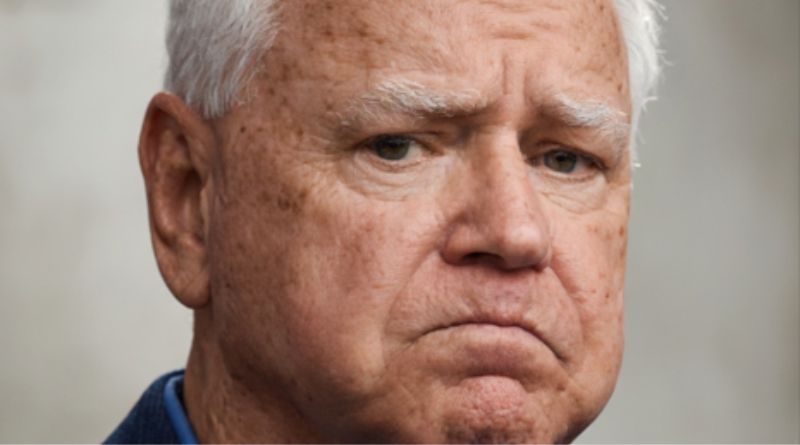
The recent developments surrounding Tim Walz have drawn attention, not as a routine political milestone, but as a moment that reflects both his leadership legacy and a turning point in his public career. Rather than signaling a rise to greater national influence, the current moment has prompted broader discussion about the nature of his leadership and how it has been tested under pressure.
Walz has long been recognized for a pragmatic approach to governance. Throughout his tenure, he emphasized practical solutions over political spectacle, focusing on policies that directly affect everyday life. His leadership style has often been described as calm and measured, with a strong emphasis on collaboration. By working across party lines and engaging with diverse stakeholders, he built a reputation for coalition-building in complex legislative environments.
His policy priorities have remained consistent over time. Education, healthcare access, infrastructure development, and economic stability have been central to his agenda. As governor of Minnesota and previously as a member of the U.S. House of Representatives, Walz supported initiatives aimed at strengthening public services and addressing long-standing systemic challenges. Supporters often point to investments in schools, healthcare systems, and transportation infrastructure as key aspects of his record.
However, the current phase of his career reflects a more complicated reality. Increased scrutiny and political challenges have shifted the narrative from one of steady governance to one of accountability and reassessment. His decision not to pursue another term has been interpreted by many as a significant moment of transition rather than expansion. This shift has led observers to reconsider how leadership styles rooted in pragmatism and consensus perform during periods of controversy.
In Minnesota, reactions remain mixed but reflective. Some view this moment as recognition of years of public service and a generally stable approach to leadership. Others see it as a reminder that even experienced leaders are not immune to political pressures and evolving public expectations.
On a national level, Walz’s career continues to offer insight into a style of governance that prioritizes stability and cooperation. While the current developments may not elevate his political standing, they contribute to an ongoing conversation about the strengths and limitations of measured leadership in an increasingly volatile political environment.