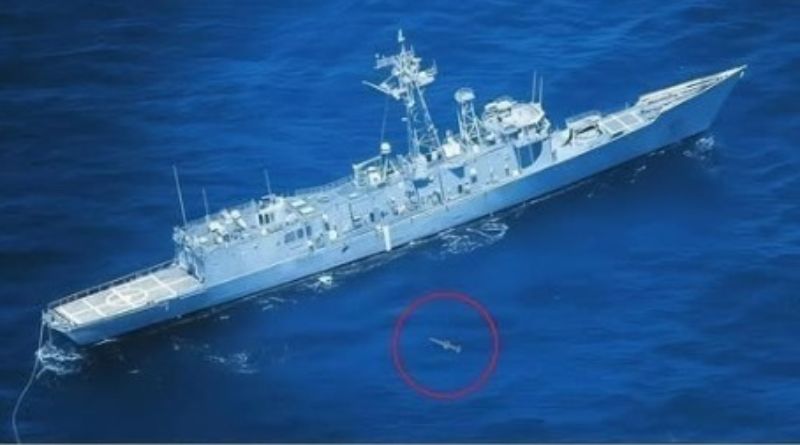
The end of the USS Rodney M. Davis (FFG-60) reflects a common, if somber, practice in modern naval operations: turning retired warships into data for the future.
Commissioned in 1982, the frigate was part of the Oliver Hazard Perry-class frigate fleet, a backbone of U.S. naval power during the Cold War. These ships were built primarily for escort missions and anti-submarine warfare, protecting carrier groups and vital shipping lanes. Named after Rodney Maxwell Davis, the vessel carried a legacy tied to valor and sacrifice.
Its final mission, however, was not combat but contribution. During a SINKEX (sinking exercise), the ship was deliberately targeted and struck by an AGM-84 Harpoon—a widely used anti-ship missile designed to simulate real-world threats. These exercises are carefully planned. Beforehand, crews remove fuel, hazardous materials, and sensitive systems to meet environmental and security standards.
The controlled strike allowed naval analysts to observe how a decommissioned vessel responds to modern weaponry—data that feeds directly into ship design, damage control strategies, and future defense planning. While the image of a once-active warship slipping beneath the waves can be emotional, especially for former crew members, the purpose is practical: improving survivability and readiness for the next generation of sailors.
In that sense, the ship’s final act wasn’t an end in defeat, but a calculated step toward strengthening the fleet it once served.