Panic moved quickly across social media after posts began claiming that Donald Trump had been “shot again” in Washington, D.C.. The wording was urgent and dramatic, prompting thousands of shares within minutes and drawing intense reactions from across the political spectrum. Yet as attention grew, the foundation of the claim began to unravel. What initially appeared to be breaking news turned out to be another example of how rapidly misinformation can spread when emotion outpaces verification.
Crucially, no credible authority has substantiated the allegation. Major U.S. and international news organizations—typically quick to confirm incidents involving prominent political figures—have published no reports supporting the claim. Likewise, there have been no alerts, statements, or briefings from law enforcement agencies or from the United States Secret Service, which would be directly involved in responding to any such emergency. In situations of genuine national significance, silence from these sources is often the clearest indicator that the story lacks legitimacy.
Investigations into the origin of the rumor suggest a familiar pattern. Some widely shared posts appear to reuse older video clips or images, presented with misleading captions that imply a new event. Others trace back to anonymous or low-credibility accounts that rely on sensational language to capture attention. These tactics are not new, but their impact has grown as algorithms reward content that provokes strong emotional reactions. As a result, false claims can gain momentum long before they are fact-checked or removed.
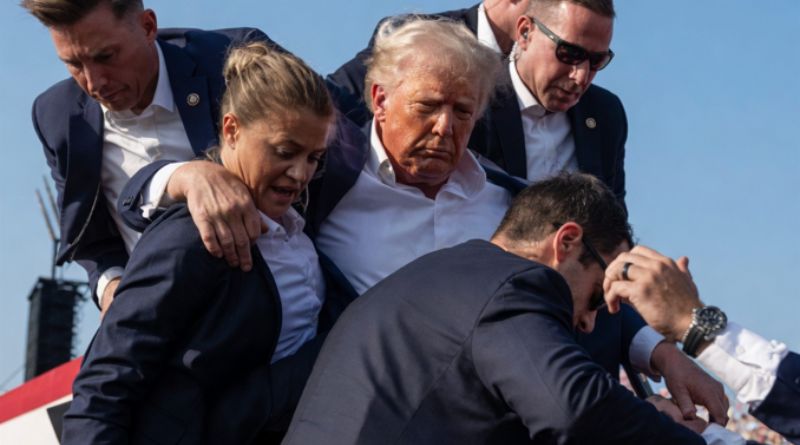
The rumor also appears to draw confusion from a real incident in 2024, when Trump was injured during an assassination attempt at a rally in Butler, Pennsylvania. That attack was thoroughly documented, investigated, and reported by credible sources, leading to significant changes in security protocols. Since then, heightened protection has remained in place, and while authorities have intercepted additional threats, none match the scenario described in today’s viral posts.
Security specialists emphasize that misinformation of this kind carries tangible risks. False reports can trigger widespread anxiety, overwhelm emergency communication channels, and force officials to divert attention from real issues. Over time, repeated exposure to such claims can also erode public confidence in legitimate reporting, making it harder for people to distinguish fact from fiction when genuine emergencies occur.
Political observers note that high-profile figures like Trump are particularly vulnerable to this kind of digital distortion. In highly polarized environments, misleading narratives can spread quickly as individuals share information that aligns with their assumptions or emotional responses. The speed of sharing often outpaces the slower, more deliberate process of verification, allowing inaccuracies to take hold before corrections reach the same audience.
At present, all verifiable evidence confirms that no new shooting involving Donald Trump has occurred in Washington, D.C., or elsewhere. The episode underscores a broader reality: in the modern information landscape, not every urgent headline reflects a real event. Exercising caution, checking multiple trusted sources, and resisting the impulse to share unverified claims are essential habits for navigating an era where misinformation can travel faster than the truth.