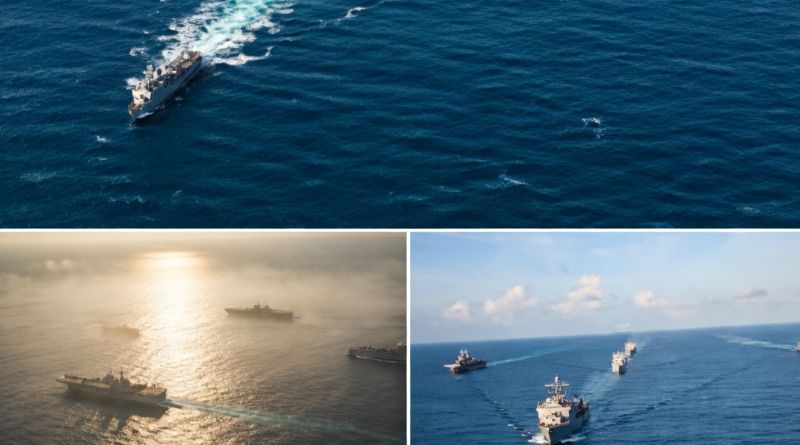
Reports indicate that the U.S. Navy has deployed the amphibious assault ships USS Tripoli and USS New Orleans to the region overseen by United States Central Command. On board are approximately 2,200 Marines from the 31st Marine Expeditionary Unit, a force known for its rapid-response capabilities and ability to operate in high-risk environments. These units are equipped with helicopters, landing craft, and other assets designed for a wide range of missions, from crisis response to potential combat operations.
The deployment comes amid heightened tensions surrounding the Strait of Hormuz, a critical global shipping route through which a large portion of the world’s oil supply passes. Any disruption in this narrow corridor has significant implications for international energy markets and global economic stability. Concerns have grown over potential interference with maritime traffic, raising alarms among Western allies and regional partners.
Additional U.S. naval forces, including carrier strike groups, are already operating in the broader region, underscoring a posture of deterrence and preparedness. While such deployments are not uncommon, their scale and timing often reflect broader geopolitical concerns and the need to reassure allies while signaling resolve to adversaries.
Attention has also focused on Kharg Island, a vital hub for Iran’s crude exports. Any developments involving this location would represent a significant escalation with far-reaching consequences. Officials have not confirmed specific operational plans, but the situation remains fluid and closely monitored.