Following the collapse of weekend peace talks with Iran, President Trump reportedly moved quickly on April 13, 2026. According to the account, the U.S. Navy imposed a naval blockade on Iranian ports and coastal areas near the Strait of Hormuz, aiming to restrict oil export revenues flowing to the regime.
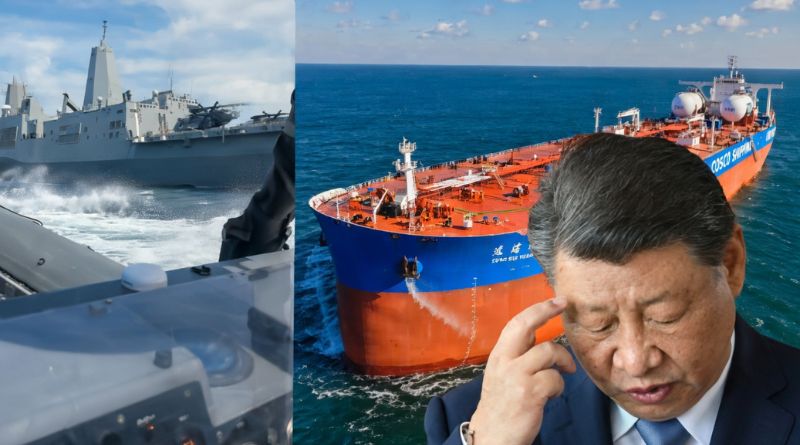
Shipping data reportedly showed immediate impact as at least two oil tankers bound for China reversed course near the strait shortly after the measure took effect at 10 a.m. EDT. The Malawi-flagged Rich Starry carrying crude and indicating China as its destination is said to have turned back within minutes of approaching the chokepoint after departing Sharjah anchorage.
The Botswana-flagged Ostria partially loaded with oil and linked to Chinese trade routes reportedly followed a similar pattern.
Reports about a third tanker remain unconfirmed though analysts suggest the broader message is that access to Iranian oil flows is increasingly constrained.
The account claims the U.S. is targeting vessels entering or leaving Iranian ports while still permitting neutral shipping through the strait to continue toward other destinations.
It is further asserted that President Trump warned that Iranian fast-attack boats approaching U.S. forces would be engaged if they came too close.
Supporters describe the strategy as part of an America First approach intended to reduce Iran’s oil revenue stream estimated in some reports at hundreds of millions of dollars per day.
They argue that sustained pressure is intended to bring Tehran back to negotiations particularly over nuclear ambitions and regional influence.
At the same time the account suggests that China heavily reliant on Iranian crude is being reminded of the strategic control exerted over the Strait of Hormuz chokepoint.
It adds that tanker movements appear to reflect heightened caution as some vessels reportedly altered routes or turned back rather than test U.S. naval presence.
Overall the narrative concludes that the blockade is having a rapid effect with Iran facing increasing economic pressure while adversaries are portrayed as reassessing risk in the region.
It further frames the situation as evidence that strength rather than restraint is producing results in ongoing geopolitical tensions in the Gulf region.
Independent verification from major international news agencies and official defense statements is not included in the original account and readers are advised to treat the claims cautiously until confirmed by authoritative sources and corroborated maritime data become publicly available through established reporting channels and official releases here.