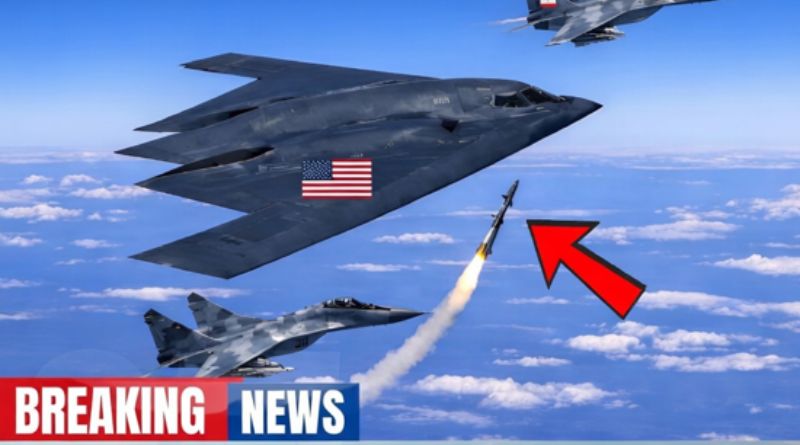
In modern warfare, the difference between victory and defeat can be measured in moments rather than hours. Imagine a quiet evening sky over Iran, the sun dipping below the horizon while the air above holds unseen activity. High above the clouds, a B-2 Spirit stealth bomber moves silently at more than 50,000 feet. Designed to evade radar, the aircraft appears almost invisible to the operators monitoring the skies below. Its presence is not just about delivering weapons—it represents a carefully planned strategy unfolding in real time.
Supporting the mission from a distance, an F-22 Raptor quietly gathers intelligence. Using advanced sensors, it detects radar signals and monitors the electronic environment, building a detailed picture of the battlefield without revealing its own location. Nearby, an EA-18G Growler begins its work in electronic warfare, disrupting communications and interfering with radar systems. In modern combat, controlling information and the electromagnetic spectrum can be just as important as firepower. Unaware of these developments, Iranian defense forces react to what appears to be a routine intrusion. MiG-29 fighter jets scramble into the air to intercept the unknown aircraft. Their pilots expect a standard engagement, relying on training designed for traditional aerial combat. However, the situation unfolding around them is far more complex.
The B-2 has already completed its reconnaissance objective, gathering valuable intelligence and helping disrupt parts of the air defense network. As the MiG-29s climb higher, the F-22 continues observing the situation while the Growler’s electronic interference creates confusion among radar operators and communication channels. Within minutes, the balance of the encounter shifts. The Iranian pilots struggle to understand the disrupted signals and limited information reaching them. Meanwhile, the advanced capabilities of the American aircraft allow them to maintain awareness and control of the situation. This imagined scenario highlights how modern warfare increasingly relies on technology, information dominance, and strategic coordination. Although fictional, it illustrates how quickly circumstances can change when advanced systems, electronic warfare, and stealth capabilities come together in a complex aerial operation.