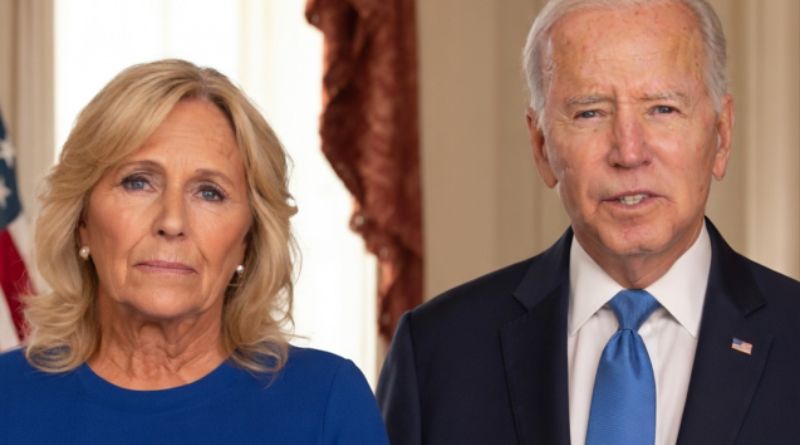
When Joe Biden addressed the nation, the moment carried more than political weight—it marked a turning point in American leadership. This was not simply another speech. It was a deeply personal message, delivered with a level of candor rarely seen on such a stage. Looking directly into the camera, Biden spoke with visible emotion, signaling not just the end of a campaign, but the closing of a defining chapter in his decades-long public life.
There was a quiet gravity to his words.
Rather than relying on familiar political rhythms, he acknowledged the realities of leadership—the demands, the limits, and the passage of time. It was a moment shaped by reflection as much as by decision. The presence of his family reinforced that sense of significance, underscoring that this was not only a political transition, but a personal one as well.
Yet the message was not rooted in conclusion alone. It was forward-looking.
By offering his full support to Kamala Harris, Biden made clear that his decision was about continuity and the future. His withdrawal was framed not as a retreat, but as a deliberate step to create space for new leadership. In doing so, he shifted the focus beyond himself and toward what comes next for the country.
That shift carried broader meaning.
It invited a larger conversation—about direction, unity, and the evolving expectations placed on those who lead. At a time marked by division and uncertainty, the moment emphasized transition over finality, and responsibility over personal ambition.
In the weeks that followed, Biden’s approach reflected that same mindset.
With less emphasis on campaigning, his attention turned more fully to governing. His actions suggested a desire to ensure that his remaining time in office aligned with the principles he expressed in that address—stability, continuity, and a steady hand during a period of change.
In the end, what set the moment apart was its tone.
It was not driven by urgency or spectacle, but by reflection and intention. It spoke to legacy, to the weight of leadership, and to the inevitability of transition.
More than anything, it marked a nation pausing—briefly—to consider not just where it stands, but where it is headed next.