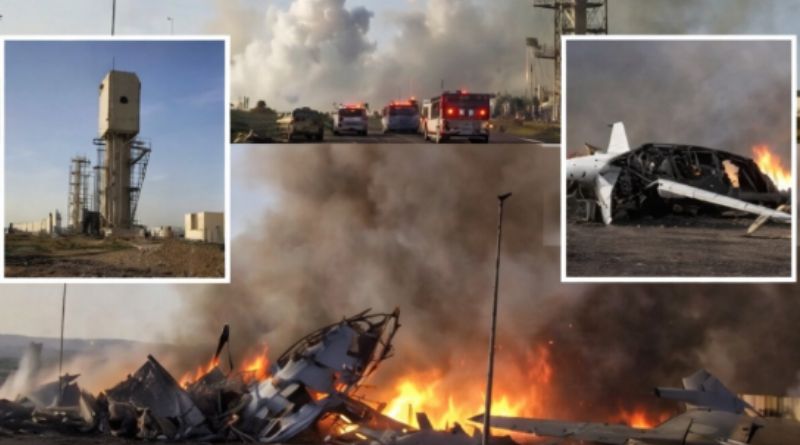
Witnesses across several regions described a striking and unusual sight: long white contrails stretching across the sky as missiles and aircraft moved toward their targets. Within moments, explosions were reported near multiple military installations, while air defense systems activated in an effort to intercept incoming projectiles. If confirmed, the operation would represent one of the largest coordinated strike campaigns in the Middle East in decades—an event with the potential to reshape the region’s strategic balance in significant ways.
A Rare Daytime Operation
Military operations of this scale are typically conducted under the cover of darkness. Nighttime conditions provide natural concealment, making it more difficult for defending forces to detect incoming aircraft or missiles. Reduced visibility also limits the chances of civilian observation and real-time reporting.
In this case, however, the strikes reportedly took place during daylight hours.
Such a decision is rarely incidental. Analysts often interpret daytime operations as a deliberate signal of confidence. Conducting a large-scale strike in full visibility may indicate that the attacking force believes it can operate with minimal risk of interception. Beyond tactical considerations, this approach carries a psychological dimension—demonstrating dominance not only to the target but also to regional observers and the international community.
Scope and Strategic Objectives
Initial reports suggest that a wide range of military infrastructure was targeted across multiple locations. These included missile storage depots, radar and early-warning systems, air defense installations, command and communication centers, and logistical hubs associated with weapons transport. Facilities linked to elite military units were also reportedly among the targets.
The apparent goal was to disrupt the target’s ability to coordinate defensive and retaliatory actions. By striking radar systems and communication networks early in the operation, attackers can degrade situational awareness, making it more difficult to track incoming threats or organize an effective response. This tactic is sometimes described as “blinding the battlefield.”
Missile depots are another critical focus in such campaigns. Destroying stored weapons reduces the likelihood of immediate retaliation and limits the target’s capacity to sustain prolonged conflict.
Contrails and Visibility
One of the most visually striking elements of the reported operation was the presence of numerous contrails crisscrossing the sky. These trails form when hot exhaust gases from high-altitude aircraft or missiles condense in cold atmospheric conditions.
When many objects travel through the same airspace within a short time frame, the result can be a dense network of white lines stretching across the horizon. Unlike nighttime strikes, where such activity is largely hidden, daylight operations make these patterns clearly visible.
Images and videos shared by residents appeared to capture these scenes, contributing to a broader sense of scale and intensity. The visibility of such activity can amplify its psychological impact, reinforcing perceptions of coordination and overwhelming force.
Air Defense Response
Reports indicate that air defense systems responded rapidly once the strikes began. Warning sirens were activated in several areas, and interceptor missiles were launched in attempts to neutralize incoming threats.
However, defending against a large, coordinated attack presents significant challenges. When multiple projectiles approach simultaneously—particularly from different directions—defensive systems can become strained. This is often referred to as a “saturation attack,” in which the volume of incoming threats exceeds the system’s capacity to respond effectively.
Even advanced air defense networks may struggle under such conditions, allowing some projectiles to reach their intended targets.
Strategic Messaging and Regional Context
Beyond their immediate military impact, operations of this magnitude often carry broader strategic messages. They can serve to demonstrate technological capability, reinforce deterrence, and signal resolve to both allies and adversaries.
In the Middle East, where geopolitical tensions are shaped by longstanding rivalries and shifting alliances, such actions can have far-reaching implications. Military infrastructure across the region is closely monitored, and any significant development can quickly alter perceptions of strength and vulnerability.
The region’s importance to global energy markets further amplifies the stakes. Disruptions can influence oil prices, shipping routes, and broader economic stability, prompting close attention from governments and financial institutions worldwide.
Risks of Escalation
Perhaps the most pressing concern following a large-scale strike is the possibility of retaliation. When key military assets are targeted, political and military leaders may feel compelled to respond in order to maintain credibility and domestic support.
Retaliatory measures could take several forms, including missile and drone attacks, cyber operations, or strikes against foreign military bases and strategic infrastructure. Each action increases the risk of further escalation, potentially triggering a cycle of responses that becomes increasingly difficult to contain.
History has shown that such cycles can expand rapidly, drawing in additional actors and widening the scope of conflict.
Information Flow and Uncertainty
In the modern era, information spreads rapidly. Social media platforms enable real-time sharing of images, videos, and eyewitness accounts, often reaching global audiences within minutes.
While this can provide valuable insights, it also introduces challenges. Not all content is verified, and misinformation can circulate alongside accurate reporting. Analysts and journalists typically rely on multiple sources—including satellite imagery and official statements—before drawing firm conclusions.
As a result, the full scope and impact of the reported operation may take time to assess.
What Happens Next
Several possible scenarios could unfold in the aftermath of such an event. Diplomatic efforts may intensify in an attempt to de-escalate tensions. Alternatively, limited retaliatory actions could occur without triggering a broader conflict. In a more severe scenario, continued exchanges could lead to wider regional involvement.
The outcome will likely depend on the decisions made in the immediate aftermath, as well as the broader strategic calculations of the parties involved.
Final Perspective
This reported strike campaign underscores the evolving nature of modern warfare. Advances in precision weaponry, surveillance, and coordination have made it possible to conduct complex operations with unprecedented speed and scale.
Yet despite these technological developments, the consequences remain deeply significant. Military actions of this kind can reshape geopolitical dynamics, influence global markets, and affect millions of lives.
For now, the situation remains fluid. Governments, analysts, and observers around the world continue to watch closely, aware that events unfolding in one region can have far-reaching effects across the global landscape.