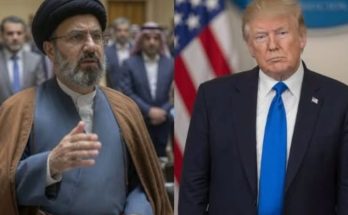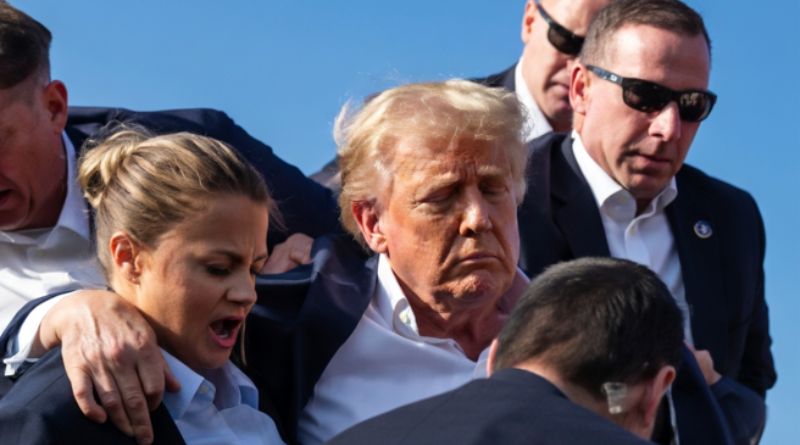
Tensions in the Middle East remain elevated following Israeli accusations that Iran violated a newly announced cease-fire brokered by U.S. President Donald Trump. The competing claims from both sides highlight the fragility of the agreement, which was intended to halt nearly two weeks of escalating conflict but instead appears to have come under strain almost immediately.
According to Israeli military officials, Iran launched additional missile barrages shortly after the cease-fire took effect. Sirens sounded across multiple regions in Israel, sending thousands of civilians rushing into shelters. Authorities reported that in the southern city of Beersheba, a missile struck a residential building, killing at least four people and injuring others. Emergency responders worked quickly to evacuate residents, treat the wounded, and assess the damage.
Iranian state media, however, strongly denied the allegations, insisting that no missiles were fired after the truce began. Officials in Tehran described the cease-fire as a strategic success and framed their position as one of restraint. This stark contrast in narratives has added confusion to an already volatile situation, making it difficult for outside observers to determine exactly what occurred in the critical early hours of the truce.
The cease-fire, announced on the eve of a NATO summit, was presented as a major diplomatic effort aimed at de-escalating hostilities between two longstanding adversaries. The agreement followed 12 days of intense conflict, during which both Israel and Iran claimed to have achieved key military objectives. President Trump’s announcement reportedly surprised some within his own administration, raising questions about the timing and coordination behind the move. Nevertheless, the truce was intended to provide an opportunity for both sides to step back, allow humanitarian relief efforts, and potentially open the door to longer-term negotiations.
Despite these intentions, the initial phase of the cease-fire has been marked by uncertainty. Israeli officials stated that several waves of missiles were detected after the agreement came into force, prompting immediate defensive responses. Although Israel’s air defense systems intercepted many of the incoming threats, at least one strike caused significant casualties and structural damage. Later in the morning, authorities issued an all-clear in some areas, but additional sirens in northern regions suggested that tensions remained high.
The situation underscores the challenges inherent in enforcing cease-fires in active conflict zones. Rapid developments, limited access for independent verification, and competing political interests often result in conflicting accounts. Both Israel and Iran have strong incentives to shape the narrative in ways that support their strategic goals and domestic audiences. As a result, early reports are frequently incomplete or contested, requiring careful analysis and confirmation from multiple sources.
Civilians have once again found themselves at the center of the crisis. The repeated missile alerts forced many residents to seek shelter multiple times within a short period, highlighting both the effectiveness and the limitations of civil defense systems. Israel’s network of bomb shelters, early warning sirens, and mobile alert systems has played a critical role in reducing casualties. However, as the strike in Beersheba demonstrated, these measures cannot eliminate the risks posed by sustained or unpredictable attacks.
Beyond the immediate humanitarian impact, the cease-fire carries significant strategic implications. For the United States, the agreement represents an effort to assert diplomatic leadership and stabilize a rapidly escalating situation. For Israel, the truce offers a temporary pause while reinforcing its position on national defense and security. For Iran, adherence to the cease-fire can be presented as evidence of discipline and strength, while any perceived violations—whether confirmed or denied—risk shaping international opinion.
The broader regional context further complicates the situation. The conflict has drawn in multiple actors and raised concerns about potential spillover into neighboring countries. Military capabilities, including Iran’s missile systems and Israel’s advanced air defenses, remain central to the strategic balance. At the same time, diplomatic engagement and international pressure are critical factors in determining whether the cease-fire can hold.
Verification remains one of the most significant challenges. In the absence of independent observers on the ground, analysts rely on satellite imagery, intercepted communications, and local reporting to piece together an accurate picture. This process takes time, meaning that initial claims—particularly those made during the chaos of active conflict—should be treated with caution.
Humanitarian concerns continue to mount as the situation unfolds. Hospitals and emergency services are under pressure to respond to casualties, while families affected by missile strikes face displacement and long-term recovery challenges. The psychological toll of repeated alarms and uncertainty is also considerable, particularly for children and vulnerable populations. International organizations have called for strict adherence to the cease-fire to prevent further loss of life and to ensure that aid can reach those in need.
Ultimately, the first hours of any cease-fire are often the most critical, and this situation is no exception. Even minor incidents or disputed actions can quickly unravel fragile agreements, leading to renewed escalation. While the truce offers a glimmer of hope for de-escalation, its success will depend on restraint, clear communication, and sustained diplomatic efforts.
For now, the world is watching closely as events continue to unfold. Whether this cease-fire marks the beginning of a broader path toward stability or merely a brief pause in hostilities remains uncertain. What is clear, however, is that the stakes are high, and the consequences of failure could be significant for the region and beyond.