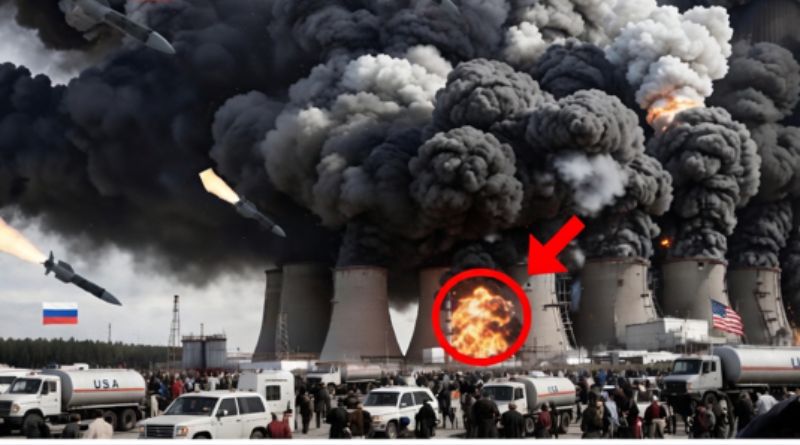
Title: Inside a High-Risk Ranger Raid: A Fictional Strike at a Strategic Chokepoint In an era defined by rising geopolitical tension and increasingly sophisticated warfare, the role of elite military units has become more critical than ever. Modern conflicts are no longer fought solely with large-scale troop movements or conventional firepower. Instead, precision, speed, and intelligence dominate the battlefield. Imagine a high-stakes scenario: 120 operators from the U.S. Army’s 75th Ranger Regiment launch a rapid direct-action raid deep داخل hostile territory. Their objective is a heavily fortified Iranian bunker complex controlling one of the world’s most vital maritime corridors—the Bab al-Mandab Strait. While entirely fictional, this scenario offers a compelling look into how such an operation might unfold and what it reveals about modern military strategy.
The Strategic Setting
The Bab al-Mandab Strait is one of the most critical chokepoints in global trade. Connecting the Red Sea to the Gulf of Aden, it serves as a gateway for massive volumes of commercial shipping, including a significant portion of the world’s oil supply.
In this imagined crisis, the strait has effectively been shut down. Nearly 95% of maritime traffic has been disrupted, triggering global economic shockwaves. Oil prices surge past $100 per barrel, supply chains falter, and international pressure mounts.
Naval patrols and airstrikes alone prove insufficient to eliminate the threat. The enemy has entrenched itself within a hardened underground bunker complex—designed to withstand bombardment and maintain operational control over the blockade.
Faced with this challenge, decision-makers turn to a force built for speed, precision, and high-risk missions: the Rangers.
The Mission Plan
Under the cover of darkness, the operation begins.
The Rangers deploy using a combination of air insertion methods, likely involving helicopters or tiltrotor aircraft capable of penetrating contested airspace. Equipped with advanced optics, suppressed weapons, and real-time intelligence feeds, the unit moves quickly and quietly toward the objective.
Their mission is straightforward but dangerous: infiltrate the bunker complex, neutralize enemy command capabilities, and restore access to the strait.
Every element of the operation hinges on timing. Surprise is their greatest advantage, and maintaining it is essential.
The Execution
As the Rangers approach the target, the operation takes an unexpected turn. Enemy forces, aware of the strategic importance of the bunker, have reinforced their defenses beyond initial intelligence estimates.
What was expected to be a swift breach becomes a complex engagement.
Despite this, the Rangers adapt rapidly. Small units maneuver with precision, using coordinated suppressive fire and breaching tactics to penetrate outer defenses. Communication remains constant, ensuring that every movement is synchronized.
Inside the compound, the fight becomes more intense. Tight corridors, reinforced doors, and layered defenses create a challenging environment. Yet, this is exactly the type of mission for which the Rangers train relentlessly.
Speed, aggression, and discipline allow them to push forward. Within minutes, key positions are secured, and command nodes are targeted.
The Outcome
In just 45 minutes, the mission reaches its conclusion.
The bunker complex is neutralized, its operational capabilities destroyed. The blockade collapses, and maritime traffic begins to flow once again.
Beyond the immediate tactical success, the operation sends a powerful strategic message. It demonstrates the ability to project force rapidly and decisively, even in heavily defended environments.
Reflections on Modern Warfare
This fictional scenario highlights several key realities of contemporary conflict.
First, control of strategic infrastructure—such as chokepoints—can have global consequences. Disruptions in these areas extend far beyond regional disputes, affecting economies and security worldwide.
Second, elite forces like the Rangers play a unique role. They are not designed for prolonged engagements but for decisive, high-impact operations where precision matters more than scale.
Finally, adaptability remains the cornerstone of success. Even the best-laid plans can encounter unexpected resistance, and the ability to adjust in real time often determines the outcome.
Conclusion
While this scenario is fictional, it reflects the evolving nature of military operations in the modern world. Precision raids, rapid deployment, and strategic targeting are increasingly central to how conflicts are managed and resolved.
At its core, the story underscores the discipline, coordination, and courage required of those who carry out such missions. It also serves as a reminder of how fragile global stability can be—and how quickly events in one region can ripple across the world.
In an age of uncertainty, understanding these dynamics is more important than ever.