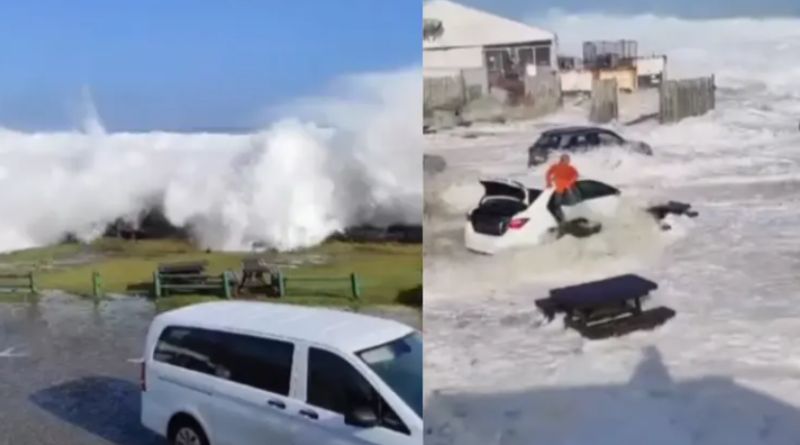
A seemingly ordinary day along the South African coastline turns into a frightening spectacle when powerful ocean waves surge towards the shore, sending water crashing across beachfront areas and catching people and vehicles off guard. Dramatic footage circulating on social media has caught viewers’ attention, showing just how quickly the ocean can turn dangerous.
The viral video is a reminder that even a beautiful beach can become hazardous when powerful swells and rough sea conditions take over. But what makes these waves so powerful, and why can they cause such chaos along coastal roads and beaches? Here’s what you need to know.
Viral Video Shows Terrifying Power of Ocean Waves
A video shared on X has drawn attention for its dramatic visuals of powerful waves along the South African coast.
- Which Country is Known Has Largest Production of Dry Fruits in the World? Here’s the Answer
- Which Country is Known for Largest Production of Almonds in the World? Here’s the Answer
- 8th Pay Commission: Good News for Employees and Pensioners as Commission Begins Work
The footage highlights the force of the incoming seawater as it rushes towards areas close to the shoreline. People and vehicles appear vulnerable when enormous amounts of water suddenly move beyond the usual boundary of the sea.
What makes the visuals particularly startling is the speed at which conditions can change. A place that looks relatively safe moments earlier can quickly become dangerous when a large wave arrives.
Watch the viral video here:
Why Do Giant Waves Suddenly Hit South African Beaches?
South Africa has an extensive coastline where the Atlantic and Indian oceans meet, with different coastal weather and sea conditions. Strong winds, distant storms, powerful ocean swells and changing tides can all contribute to rough sea conditions.
Sometimes, waves generated by storms far away travel across the ocean before reaching the coastline. These swells can carry considerable energy even when the weather near the beach does not look particularly threatening.
When large swells meet shallow coastal areas and sea walls, the resulting waves can become especially dramatic.
How Can Powerful Waves Move Cars and Knock People Off Their Feet?
Ocean water is incredibly powerful, particularly when it moves in large volumes. A strong wave can push against vehicles, flood roads and sweep loose objects away.
People standing close to the shoreline can also struggle to maintain their balance when a sudden surge of water reaches them.
Some of the biggest dangers include:
- Sudden water surges: Waves can travel much farther inland than expected.
- Strong currents: Moving water can knock people down and pull them away from safety.
- Vehicle damage: Floodwater and wave impact can move parked vehicles or damage their components.
- Hidden dangers: Debris, slippery surfaces and unpredictable currents can make escape difficult.
This is why coastal authorities regularly warn visitors against getting too close to rough seas, even when the waves appear fascinating to watch.
South Africa’s Coastline Has Witnessed Powerful Wave Events Before
This is not the first time dramatic ocean waves have attracted attention along South Africa’s coastline.
In September 2023, powerful swells and spring high tides affected several coastal locations, including Gordon’s Bay, Stilbaai, Mossel Bay and Three Anchor Bay. Reports described vehicles being affected by the waves, with some cars swept into the sea.
Cape Town has also experienced severe winter storms that brought huge waves crashing over coastal roads.
These incidents demonstrate how vulnerable coastal communities can be when extreme sea conditions develop.