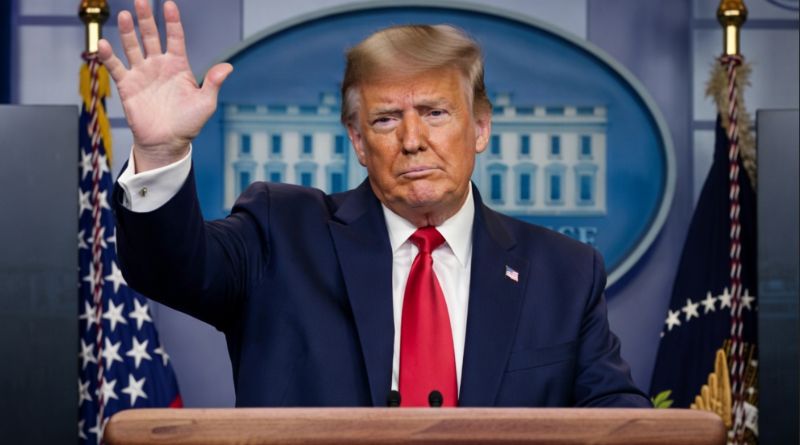
President Donald J. Trump reaffirmed his administration’s strong commitment to public safety following the extradition of alleged MS-13 leader Francisco Javier Roman-Bardales from Mexico to the United States. Roman-Bardales, who had long been a top target for law enforcement, now faces serious charges related to organized crime, violence, and transnational criminal operations. His capture represents a major milestone in efforts to dismantle dangerous criminal networks that operate across international borders. As a senior figure in MS-13, Roman-Bardales had evaded authorities for years, making him one of the most wanted fugitives in the world. His placement on the FBI’s Ten Most Wanted list underscored both the severity of his alleged crimes and the threat he posed to communities affected by gang violence and extortion. His eventual apprehension highlights the increasing effectiveness of coordinated law enforcement strategies, combining intelligence gathering, surveillance, and cross-border collaboration.
Roman-Bardales is the third fugitive from the FBI’s most-wanted list to be captured in 2025, alongside Arnoldo Jimenez and Donald Eugene Fields II. Together, these arrests demonstrate a focused effort to prioritize individuals considered the most dangerous. By targeting high-level offenders, authorities aim not only to remove immediate threats but also to weaken the broader criminal structures that enable ongoing violence. The extradition was the result of extensive cooperation between U.S. agencies—including the FBI, the Department of Justice, and the Department of Homeland Security—and Mexican law enforcement authorities. This collaboration illustrates the critical role of international partnerships in combating transnational crime. Criminal organizations like MS-13 often exploit national borders to avoid capture, making coordinated global efforts essential to ensuring accountability. Officials emphasized that such operations require careful planning and sustained investigative work. Law enforcement agencies relied on a combination of intelligence sources, including informants, surveillance operations, and digital data analysis, to locate and apprehend the fugitive. These modern investigative techniques reflect the evolving nature of policing in an increasingly interconnected world.
FBI Director Kash Patel highlighted the broader significance of the arrest, stating that it sends a clear message to criminal networks that the United States will continue to pursue those responsible for violent and organized crime. His remarks reinforced the administration’s position that accountability and public safety remain top priorities. Beyond its immediate impact, the capture of Roman-Bardales carries symbolic importance. It demonstrates that even the most elusive criminals cannot evade justice indefinitely. For communities affected by gang violence, the arrest provides reassurance that law enforcement agencies are actively working to protect them and uphold the rule of law. At the same time, officials acknowledged that the fight against transnational criminal organizations is ongoing. While the apprehension of a high-profile fugitive is a significant achievement, dismantling complex criminal networks requires sustained effort, international cooperation, and continued investment in intelligence and enforcement capabilities.In conclusion, the extradition of Francisco Javier Roman-Bardales reflects a comprehensive approach to combating organized crime—one that combines strategic targeting, global collaboration, and advanced investigative methods. It stands as both a practical success in removing a dangerous individual from circulation and a broader affirmation that justice can prevail even against the most sophisticated criminal operations.