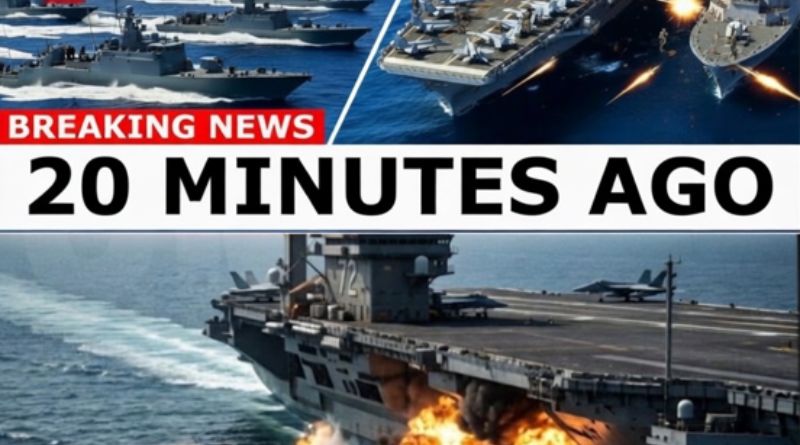
In an era of rising geopolitical tension, the presence of a U.S. aircraft carrier strike group remains one of the most powerful symbols of military deterrence. At the center of such a formation is the USS Abraham Lincoln, a massive, mobile airbase designed to project power across vast distances while operating within a highly coordinated defensive network. Imagine a hypothetical scenario in which this carrier group faces a sudden, coordinated assault. A swarm of fast attack boats races across the water while enemy aircraft approach from above, attempting to overwhelm defenses through speed and numbers. Though dramatic, such a situation would immediately trigger a well-rehearsed and layered response.
Long before the threats draw close, advanced detection systems come into play. Airborne surveillance platforms like the E-2D Hawkeye monitor the skies, identifying hostile aircraft at long range. At the same time, powerful ship-based radar systems track surface movements, ensuring that no approach goes unnoticed. Rather than waiting for enemies to close in, the strike group responds proactively. Fighter jets such as the F/A-18 Super Hornet launch quickly to intercept incoming aircraft far from the carrier. Equipped with advanced missiles and guided by real-time data, they aim to neutralize threats before they can strike.
On the surface, escort vessels like the Arleigh Burke-class destroyer establish a defensive perimeter. Their integrated combat systems allow them to engage multiple threats at once, targeting both aerial and maritime attackers with precision. If any threats manage to breach these outer defenses, close-in systems such as the Phalanx CIWS provide a final layer of protection. This scenario highlights a key reality: modern naval warfare depends on coordination, early detection, and layered defense, not just raw firepower.