WASHINGTON — Trump Administration Pushes for Major Iran Agreement as Naval Standoff and Diplomatic Negotiations Continue
Senior officials within the Trump administration are pursuing intensive diplomatic efforts to negotiate a broader agreement that could bring an end to the ongoing military confrontation with Iran. The effort combines indirect discussions facilitated by Qatari intermediaries with continued American maritime pressure across the Persian Gulf and Gulf of Oman.
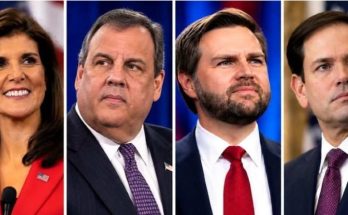
The proposed framework, developed under President Donald Trump alongside Vice President JD Vance and Secretary of State Marco Rubio, is intended to address Iran’s nuclear program while securing unrestricted international navigation through the strategically vital Strait of Hormuz.
However, negotiations remain complicated by continuing military tensions. Although representatives are exchanging proposed agreement language through diplomatic channels in Doha, confrontations involving American naval forces and Iranian coastal defense units threaten to undermine the fragile diplomatic process.
Speaking to journalists while on an official diplomatic visit to India, Rubio emphasized that Washington considers the reopening of the Strait of Hormuz essential and indicated that the United States is prepared to take action to protect international shipping if negotiations fail.
“The straits have to be open, they’re going to be open,” Rubio said. “What’s happening there is unlawful, it’s illegal, it’s unsustainable for the world, it’s unacceptable.”
Rubio also confirmed that discussions involving Qatari mediators were continuing. He explained that negotiators were working through specific provisions and legal wording rather than simply discussing general principles.
“There were some talks going on in Qatar today, so we’ll see if we can make progress,” Rubio stated. “I think it’s a lot of talking back and forth going on about specific language in the initial document, so it’ll take a few days. The president expressed his desire to make it. He’s either going to make a good deal or no deal.”
Military Operations Continue Despite Diplomatic Progress
While diplomatic representatives work toward narrowing their disagreements in Doha, military forces throughout the surrounding waterways remain on heightened alert.
According to senior defense officials, approximately two dozen American naval vessels remain involved in maritime enforcement operations. The deployment reportedly includes two nuclear-powered aircraft carrier strike groups, guided-missile cruisers, and Arleigh Burke-class destroyers, supported by combat aircraft operating from regional installations.
The American maritime operation is designed to restrict commercial shipping connected to Iranian ports and prevent unauthorized access to Iranian terminals through surrounding international waters.
Tensions escalated further on Monday after Iranian surface-to-air missile systems reportedly engaged American tactical aircraft conducting surveillance near the maritime exclusion zone. American forces responded with precision military strikes that destroyed mobile missile launchers and damaged early-warning radar infrastructure along Iran’s coastline.
The confrontation marks one of the most significant military incidents since both sides entered an approximately six-week pause in large-scale aerial bombardment.
Although the temporary reduction in major military operations was intended to create space for diplomatic negotiations, smaller clashes involving aircraft and naval forces continue to threaten the arrangement. Any additional confrontation could undermine diplomatic progress and potentially trigger another round of direct military action.
Iran Warns Against Expecting an Immediate Agreement
In Tehran, Iranian officials have acknowledged that discussions have advanced on several important issues but have cautioned against interpreting the progress as evidence that a final agreement is imminent.
During a regular press briefing, Iranian Foreign Ministry spokesman Esmaeil Baqaei said negotiators had reached an understanding on numerous technical aspects of the proposed framework. However, he also accused Washington of introducing additional conditions that could complicate the negotiations.
“It is correct to say that we have reached a conclusion on a large portion of the issues under discussion,” Baqaei said. “But to say that this means the signing of an agreement is imminent—no one can make such a claim.”
Iranian representatives are reportedly seeking substantial sanctions relief at the beginning of any agreement, legally binding security assurances against future attacks, and a defined process for releasing frozen Iranian financial assets held overseas.
Tehran also wants clear guarantees that Washington will not continuously introduce new requirements after an agreement has been reached. Iranian officials argue that American verification demands and economic restrictions could undermine the possibility of a lasting settlement.
Three Major Components of the Proposed Agreement
Diplomatic sources familiar with the negotiations describe the emerging proposal as a three-part arrangement intended to address maritime security, nuclear restrictions, and economic sanctions.
1. Reopening the Strait of Hormuz
Under the proposed arrangement, Iran would be expected to undertake mine-clearing operations, reduce the activities of Islamic Revolutionary Guard Corps fast-attack vessels, and provide guarantees that international commercial ships can pass through the Strait of Hormuz without obstruction.
In return, the United States would remove its maritime interdiction restrictions and allow commercial shipping connected to Iranian ports to resume normal operations.
2. Restrictions on Iran’s Nuclear Program
Another central component would require Tehran to reduce its existing stockpiles of highly enriched uranium, accept limits on future enrichment activities, and restore broader monitoring access for the International Atomic Energy Agency.
The proposed verification arrangements would also cover sensitive underground nuclear research facilities, allowing international inspectors to assess Iran’s compliance with the agreement.
3. Economic Relief and Frozen Assets
The economic provisions would provide Iran with a pathway toward sanctions relief if it fulfills the agreement’s requirements.
Washington could suspend certain secondary sanctions targeting energy transactions, establish procedures for releasing frozen overseas financial assets, and permit monitored sales of designated quantities of Iranian crude oil in international markets.
The Coming Days Could Shape the Future of the Region
White House officials have argued that continued American military pressure has strengthened Washington’s negotiating position and encouraged Tehran to consider compromises that could previously have been difficult to secure.
Nevertheless, significant disagreements remain, and neither government has announced a completed agreement.
With American carrier strike groups and supporting combat aircraft maintaining their regional deployments, while Iranian military units remain positioned along strategically important coastal areas, the situation remains highly sensitive.
The next phase of negotiations could determine whether Washington and Tehran move closer to a broader diplomatic settlement or whether continued disagreements and military incidents push the region toward another escalation.
For now, discussions remain underway, the proposed agreement is still being negotiated, and the future of the Strait of Hormuz remains one of the central issues at the heart of the crisis.