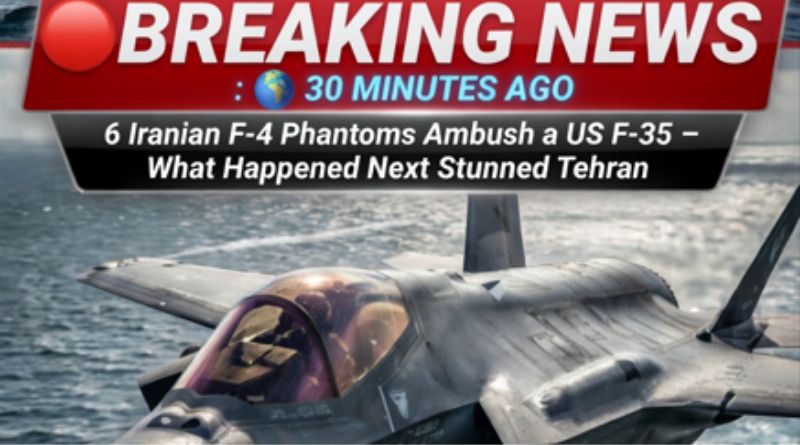
The F-35 Lightning II holds a decisive technological advantage over Iran’s aging F-4 Phantom II, a difference that can dramatically shape the outcome of any aerial encounter between the two aircraft. The F-4E Phantom II, which first flew in 1961, was designed during the Cold War and once served as a backbone fighter for several air forces. Iran has managed to keep roughly 60 of these aircraft operational through upgrades, careful maintenance, and reverse-engineered components. Despite these efforts, the platform still reflects older aviation technology and combat doctrine, relying on conventional radar systems and pilot-controlled targeting.
By contrast, the F-35A Lightning II represents a new generation of fighter aircraft. Built with stealth technology and advanced avionics, the aircraft is designed to detect and engage threats long before the enemy even realizes it is present. Its low radar signature makes it far more difficult for older aircraft to identify or track. A key component of the aircraft’s capability is the AN/APG-81 radar, an advanced AESA radar system capable of monitoring multiple airborne targets at distances exceeding 150 nautical miles. This system allows the aircraft to maintain constant situational awareness across a wide combat area.
During the reported encounter, the stealth fighter detected a formation of Iranian Phantoms at approximately 140 nautical miles away. The F-35 pilot, operating under the call sign Corsair 11, tracked all six aircraft using a low-probability-of-intercept radar mode, allowing the jet to remain electronically concealed. Meanwhile, the Iranian pilots maintained radar silence and relied on inertial navigation and ground guidance for positioning. Unaware they had already been detected, they continued their approach as the stealth fighter quietly maneuvered into position and prepared its weapons for engagement.