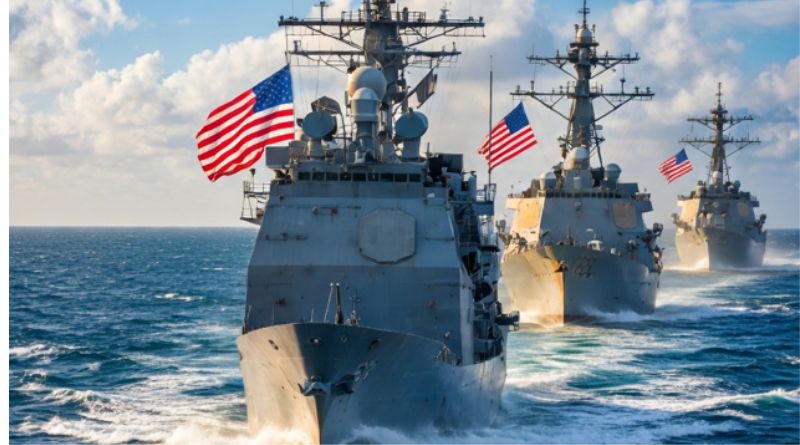
In late February 2026, rising tensions in the Middle East escalated dramatically when the United States and Israel launched coordinated military strikes against Iran. What initially appeared to be a limited military operation quickly expanded into a broader conflict involving missile attacks, drone warfare, and growing regional instability. The confrontation has drawn global attention as governments, markets, and international organizations monitor the rapidly evolving situation.
The roots of the conflict stretch back decades. Long-standing disputes between Iran, Israel, and the United States over nuclear development, regional influence, and military alliances have repeatedly fueled instability in the Middle East. In recent years, tensions intensified through proxy conflicts and military incidents. Missile and drone exchanges between Israel and Iran became more frequent, while attacks on commercial shipping in the Red Sea and the Persian Gulf—often linked to Iranian-aligned groups—raised international concerns about maritime security. The current phase of the conflict began on February 28, 2026, when U.S. and Israeli forces carried out coordinated strikes on multiple targets inside Iran. Military facilities, missile launch sites, air-defense systems, and command centers in cities such as Tehran, Isfahan, and Qom were reportedly hit during the operation. The attacks were described by U.S. officials as pre-emptive measures aimed at weakening Iran’s missile and drone capabilities and preventing future threats to regional allies.
Iran responded quickly with retaliatory actions. Ballistic missiles and armed drones were launched toward Israeli territory and U.S. military bases located across the Gulf region, including facilities in Kuwait, Bahrain, and Saudi Arabia. While many of these projectiles were intercepted by advanced air-defense systems, some strikes caused casualties and damage to infrastructure. Beyond the battlefield, the conflict has triggered significant global consequences. Oil prices surged amid fears that the fighting could disrupt shipping through the Strait of Hormuz, one of the world’s most critical energy routes. Financial markets have also shown increased volatility as investors react to geopolitical uncertainty. As the war continues to unfold, diplomatic efforts to reduce tensions remain ongoing. Many world leaders and international organizations have called for restraint and negotiations to prevent further escalation and limit the humanitarian and economic consequences of the conflict.