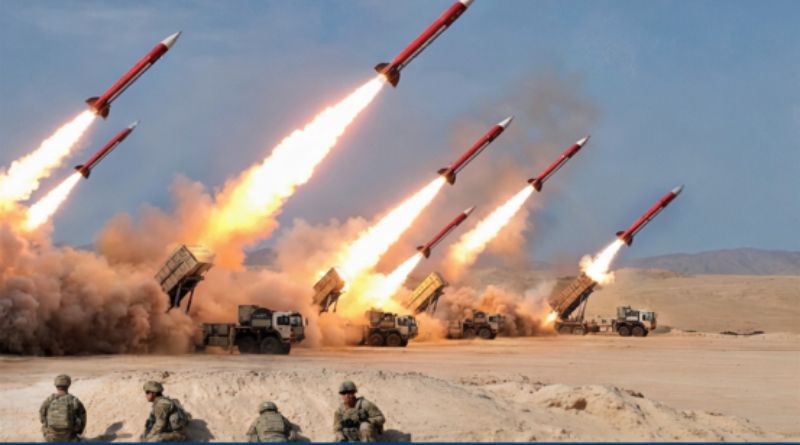
In the early hours of what became known as Operation Epic Fury, a dramatic moment in modern military history unfolded. Iran reportedly launched one of the largest coordinated missile and drone attacks ever directed at U.S. forces. More than a thousand ballistic missiles and drones were aimed at seven American military bases located across six countries, creating an unprecedented test for U.S. air defense systems. The scale and coordination of the attack suggested careful planning. By launching such a large number of weapons simultaneously, the operation appeared designed to overwhelm defensive systems through sheer volume. Each missile and drone represented a serious threat, forcing American forces to rely on multiple layers of defense to protect personnel, aircraft, and infrastructure.
As the barrage began, U.S. missile defense systems quickly activated across the region. Patriot batteries were among the first to engage incoming threats, intercepting drones and short-range ballistic missiles before they could reach their targets. The PAC-3 interceptors proved particularly effective against high-speed missiles traveling at extreme velocities. At Ali Al-Salem Air Base in Kuwait, defensive units reportedly achieved a remarkable success rate, intercepting every missile directed toward the base. This performance demonstrated the effectiveness of well-coordinated radar tracking, rapid response systems, and trained personnel operating under intense pressure.
Other systems also played vital roles. Terminal High Altitude Area Defense (THAAD) batteries intercepted ballistic missiles during the final phase of their descent toward bases in the Gulf region. Meanwhile, close-range defense systems such as the Phalanx CIWS provided a last line of protection against drones or missiles that slipped through outer defenses. Despite the intensity of the attack, American forces maintained operational readiness. Fighter aircraft continued launching missions, naval forces relied on advanced radar systems to track threats, and U.S. bases remained active throughout the crisis. The events of that night highlighted the importance of layered missile defense in modern warfare and demonstrated how technology and training combine to protect military forces under extreme conditions.